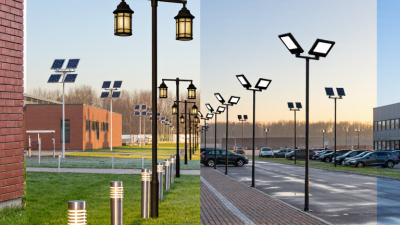
China Best LED Solar Lights Outdoor for Wholesale Buyers?
Choosing China’s best LED solar lights for outdoor wholesale is not just a price comparison. Led Solar Lights Outdoor products vary widely in brightness, battery capacity, panel size, and build quality. A compact garden stake may suit a walkway, while a motion-sensor floodlight needs a different panel and battery balance. Details matter. Buyers should compare usable brightness, charging time, expected runtime, and light color under similar conditions. A large lumen figure alone can be misleading if the lamp dims quickly or the battery is undersized.
Reliable sourcing also depends on what happens after the sample arrives. Ask suppliers for product specifications, battery details, available test reports, warranty terms, and packaging information. Check whether an IP rating is supported by relevant testing, especially for lights exposed to rain and dust. Then test samples outdoors through several charge-and-use cycles. Cloudy days change the results. So does winter. Confirm minimum order quantities, customization options, lead times, spare parts, and carton dimensions before negotiating a bulk order. Requirements can differ by destination, so buyers should verify applicable product and import requirements with qualified local sources.
There is no single supplier or model that fits every market. A low quotation may hide shorter runtime, inconsistent components, or limited after-sales support. Sometimes the sample is excellent, but the next production batch feels different. That deserves a closer look. This guide helps wholesale buyers assess Chinese manufacturers with practical checks, clearer questions, and realistic expectations before committing to an order.
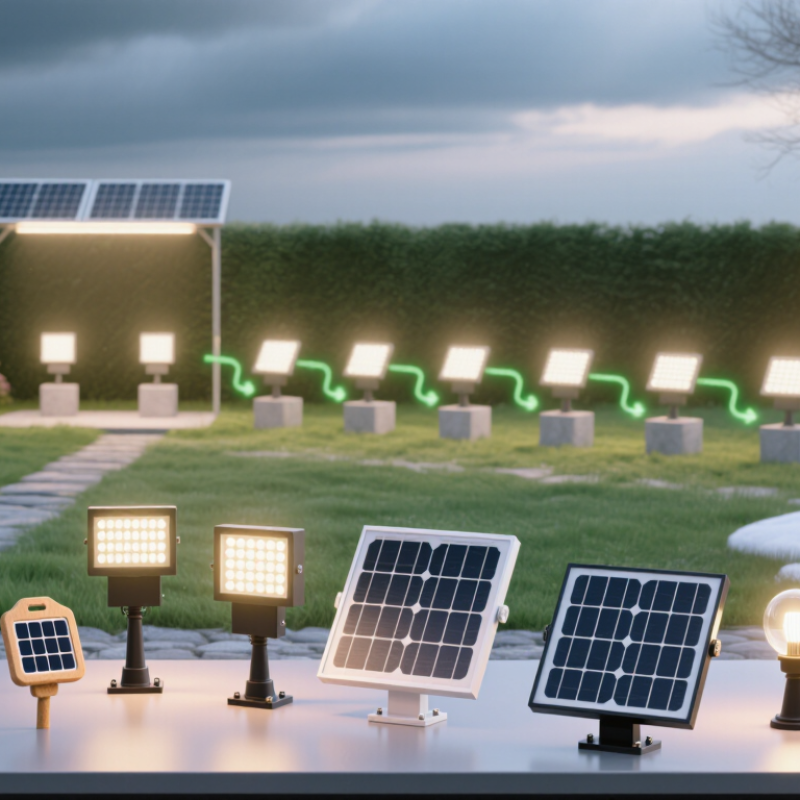
Table of Contents
[Hide]
What Are Outdoor LED Solar Lights and How Do They Work?
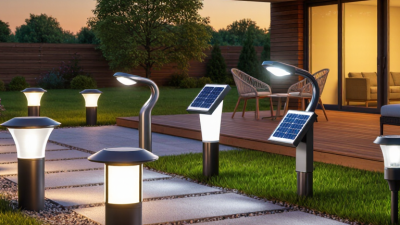
Outdoor LED solar lights combine a photovoltaic panel, rechargeable battery, charge controller, light sensor, and LED fixture. The panel converts daylight into electricity and stores it in the battery. The controller helps manage charging and protects the battery from overcharging. After dusk, the sensor switches on the LEDs, using stored energy instead of grid power. No trenching is usually needed. Shade and short winter days can reduce charging, though.
IRENA’s Renewable Capacity Statistics 2024 reports that global solar photovoltaic capacity reached 1,419 GW by the end of 2023. That figure covers solar power broadly, not outdoor lights, but it shows how widely the underlying technology is being deployed. For wholesale evaluation, check panel output, battery capacity, stated lumen output, weather-resistance rating, and tested runtime. The U.S. Department of Energy says LEDs use at least 75% less energy than incandescent lighting; efficient LEDs can therefore help a small battery provide useful light longer. Still, a bright label is not a runtime test. Test samples in the intended location, including after cloudy days, and record brightness and operating hours. The results may be less tidy than the catalogue suggests.
China Best LED Solar Lights Outdoor for Wholesale Buyers? - What Are Outdoor LED Solar Lights and How Do They Work?
Outdoor LED solar lights use photovoltaic panels to convert sunlight into electricity, store energy in a rechargeable battery, and power LEDs after dark. Specifications below are typical product ranges, not guarantees; actual performance depends on design, weather, installation, and operating settings.
| Product Type | Typical Application | Common System Details | How It Operates | Wholesale Evaluation Points |
|---|---|---|---|---|
| Solar Garden or Pathway Light | Paths, garden borders, entrances, and decorative outdoor areas | Integrated solar panel and battery; commonly uses a dusk-to-dawn sensor; light output varies by model and design | The panel charges the battery during daylight. A light sensor typically switches the LEDs on when ambient light falls. | Check mounting method, weather resistance, battery replacement options, and whether the brightness suits the intended area. |
| Solar Wall Light | Exterior walls, doors, garages, and walkways | Wall-mounted panel or integrated panel; some models include a motion sensor and selectable operating modes | Stored battery power runs the LEDs at night. Motion-sensing models may increase brightness when movement is detected. | Review sensor detection range, installation height guidance, charging conditions, and the light's stated ingress protection rating. |
| Solar Floodlight | Yards, building exteriors, signs, and security lighting | Often uses a separate panel connected by cable; may include a remote control, timer, or motion sensor | Sunlight charges the battery through the panel. The controller manages charging and supplies power to the LED array according to its settings. | Compare measured light output, panel cable length, battery capacity, operating modes, and performance after cloudy weather. |
| Solar Street or Area Light | Roads, parking areas, campuses, and public spaces | Typically combines a solar panel, rechargeable battery, LED module, controller, and pole or mounting hardware | The panel charges the battery by day; a controller can switch the lamp on at dusk and regulate output during the night to conserve energy. | Assess site sunlight, pole height, lighting layout, battery and panel sizing, service access, and applicable local lighting requirements. |
| Solar Security Light | Entrances, driveways, sheds, and perimeter areas | Usually includes a motion detector; brightness, sensor settings, and standby behavior differ by model | The light can remain dim or off while idle, then illuminate when the sensor detects movement, helping reduce energy use. | Confirm sensor type and adjustment range, false-trigger settings, coverage area, and whether the selected mode meets the use case. |
| Main Components and Their Functions | ||||
| Photovoltaic Solar Panel | Captures sunlight and produces electrical energy | Panel output is commonly specified in watts; charging depends on panel size, orientation, shade, and available sunlight | Photovoltaic cells generate direct-current electricity when exposed to light. The system routes this energy to the battery through its charging circuit. | Request panel output specifications and installation guidance; avoid comparing panel wattage without considering battery and system design. |
| Rechargeable Battery | Stores energy for use when sunlight is unavailable | Capacity is commonly listed in amp-hours (Ah) or watt-hours (Wh); lithium-based and nickel-metal hydride batteries are used in different product designs | The battery stores electricity produced during the day and supplies power to the LED and control electronics at night. | Check chemistry, rated capacity, replacement availability, operating-temperature limits, and the supplier's cycle-life test conditions. |
| Charge Controller | Manages battery charging and protects system operation | May provide overcharge protection, low-voltage protection, dusk-to-dawn control, and timed or dimming functions | The controller regulates energy flow between the panel, battery, and lamp to support safe charging and scheduled lighting. | Request details of protection functions and operating modes; confirm compatibility among the panel, battery, and LED load. |
| LED Module and Optics | Produces and directs visible light | Light output is measured in lumens; color temperature is measured in kelvin; beam pattern depends on lenses and reflectors | Electrical energy from the battery drives the LEDs. Optical components distribute the light across the target area. | Compare lumen output, color temperature, beam distribution, and test documentation rather than relying on LED chip counts alone. |
| Light or Motion Sensor | Automates switching and, where included, responds to movement | Light sensors detect ambient brightness; motion sensors commonly use passive infrared (PIR) detection | A light sensor can activate the lamp at dusk. A motion sensor can trigger a brighter or timed lighting mode when movement is detected. | Check sensor sensitivity, detection angle, delay settings, and the instructions for testing the product after installation. |
| Practical Checks Before Placing a Wholesale Order | ||||
| Weather and Ingress Protection | Outdoor exposure to rain, dust, and changing temperatures | Ingress protection (IP) ratings describe resistance to dust and water under specified test conditions | Enclosures, seals, and connectors help protect electrical parts from environmental exposure. | Verify the stated IP rating and test documentation for the complete product; installation details can affect real-world protection. |
| Lighting and Runtime Claims | Matching brightness and operating duration to the project | Runtime varies with battery capacity, available charging, LED power, sensors, and dimming schedules | The lamp uses stored energy after dark; reduced output or motion-only operation can extend operating time. | Ask how lumen output and runtime were measured, including test conditions and operating mode. Avoid treating advertised maximums as guaranteed results. |
| Installation and Site Conditions | Ensuring the panel receives adequate sunlight | Shade, panel angle, orientation, dirt, seasonal daylight, and local weather affect charging | More unobstructed sunlight generally gives the panel better opportunity to recharge the battery. | Check mounting dimensions, cable length, recommended panel placement, and whether the intended site has regular direct sunlight. |