Chat with us, powered by LiveChat

How to Choose the Best Solar Pathway Lights?

Choosing Solar Pathway Lights seems simple until your garden becomes a real testing ground. A product that looks attractive online may cast weak light beside tall grass. Another may shine brightly for one evening, then fade before midnight. Good choices depend on more than appearance. They require practical attention to brightness, runtime, weather resistance, materials, and placement.

This guide examines the details that influence everyday performance. We will consider lumen output, beam direction, panel efficiency, battery capacity, and charging conditions. A shaded walkway may need a different design from an open patio. In colder or cloudier climates, charging time can change significantly. Look for clear specifications, realistic operating claims, and an appropriate IP rating for outdoor exposure. Manufacturer warranties and verified customer feedback can also reveal weaknesses hidden by polished product images.

My own preference has changed after seeing several lights fail near wet soil and dense planting. Stainless steel looked durable, but thin housings still developed loose fittings. A brighter model was not always better, especially when glare reached nearby windows. Small spacing adjustments often improved safety more than higher brightness. That lesson is easy to overlook. No single design suits every property, budget, or climate. Therefore, this overview will compare aesthetic value with measurable performance, while acknowledging the compromises involved. The goal is not to promote the most expensive option. It is to help readers choose dependable lighting that supports safer movement, complements the landscape, and performs reasonably through changing seasons.
How to Choose the Best Solar Pathway Lights?

Understanding Solar Pathway Light Types and Key Features

How to Choose the Best Solar Pathway Lights?

Understanding Solar Pathway Light Types and Key Features

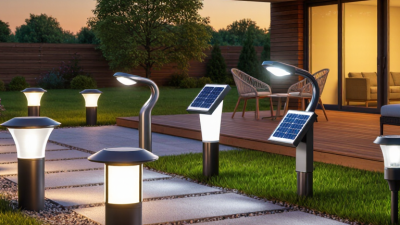
Solar pathway lights usually use LED fixtures, stake lights, or low-profile deck designs. Stake lights suit soil beside gardens, while deck models work better on steps and paved edges. Choose warm white LEDs for a softer evening atmosphere. Cool white LEDs provide sharper visibility, but they can feel harsh near bedrooms.

The U.S. Department of Energy reports that LED lighting uses at least 75% less energy and lasts up to 25 times longer than incandescent lighting. That advantage matters when selecting small solar fixtures with limited battery capacity. Check the panel size, battery chemistry, lumen output, and automatic dusk sensor. A larger panel may recharge faster after cloudy weather. However, published runtime figures often assume ideal sunlight.

The International Energy Agency reported that global solar photovoltaic capacity grew by about 450 gigawatts in 2023. This expansion supports wider access to efficient solar components, but outdoor performance still depends heavily on placement. Install panels away from tree shadows and strong night lighting. Look for weather-resistant housings and secure ground stakes. A light rated for rain may still fail in standing water. I learned this the inconvenient way. Also, avoid choosing brightness alone. A 100-lumen light can create glare when spaced too closely, while several lower-lumen fixtures may produce more even illumination. Check the actual winter sunlight available in your area before buying.

Assessing Brightness, Runtime, Materials, and Weather Resistance

How to Choose the Best Solar Pathway Lights?

Brightness should be judged in lumens, not decorative wattage. For walkways, 10–30 lumens per light often creates gentle guidance. Higher output can produce harsh glare near eye level. The U.S. Department of Energy reports that LED lighting uses at least 75% less energy than incandescent lighting and can last up to 25 times longer. That supports efficient night lighting, but it does not guarantee useful illumination. Test one fixture beside dark steps before buying a full set.

Runtime depends on panel size, battery capacity, shade, and temperature. A stated “12-hour” runtime may reflect ideal summer charging. NREL’s PVWatts documentation accounts for irradiance, temperature, and system losses, showing why seasonal performance changes. Check the light after a cloudy day. Five dependable hours may be better than twelve weak hours. I sometimes overvalue brightness and underestimate winter charging.

Materials deserve close inspection. Powder-coated aluminum resists corrosion, while stainless steel can suit damp gardens and coastal air. Plastic housings may perform well, but brittle plastic can fail after repeated freezing. Look for an IP rating under IEC 60529. IP65 protects against dust and water jets, but it does not permit immersion. Keep drainage holes clear. Small details matter. A sealed lens, firm ground stake, and replaceable battery can matter more than attractive packaging.

How to Choose the Best Solar Pathway Lights? — Assessing Brightness, Runtime, Materials, and Weather Resistance
Evaluation Dimension Practical Range or Standard What It Means Recommended Choice Important Checking Point
Brightness 5–15 lumens Provides soft decorative illumination and a visible guide along short walkways. Do not compare brightness by LED wattage alone; lumens are the more useful measure of light output.
Brightness 16–30 lumens Creates a brighter pool of light for steps, entrances, and frequently used paths. Use a wider light distribution to reduce dark gaps between fixtures.
Brightness 31 lumens or more Produces stronger illumination but generally requires a larger solar panel or battery capacity. Check whether the higher output reduces the expected overnight runtime.
Typical Runtime 6–8 hours after a full sunny day Usually covers the evening period in many seasons. Runtime depends on sunlight, panel angle, battery condition, temperature, and operating mode.
Extended Runtime 8–12 hours after a full sunny day Offers better overnight coverage when the solar panel and rechargeable battery are adequately sized. In winter or prolonged cloudy weather, actual runtime may be substantially shorter.
Battery Type Rechargeable NiMH, commonly 1.2 V Nickel-metal hydride batteries are widely used in small solar lights and are designed for repeated charging. Common capacities are approximately 600–1,200 mAh, but capacity alone does not guarantee longer runtime.
Solar Panel Monocrystalline or polycrystalline photovoltaic panel Converts sunlight into electricity during the day; panel size and placement affect charging performance. Place the panel where it receives direct sunlight and keep it free from dirt, leaves, and snow.
Housing Material UV-resistant ABS or polycarbonate plastic Lightweight, corrosion-resistant, and usually more affordable for standard garden use. Look for UV-resistant construction to reduce fading, cracking, and brittleness caused by sunlight.
Housing Material Aluminum or stainless steel Offers a more rigid structure and a higher-quality appearance than basic plastic housings. Stainless steel should be corrosion-resistant; aluminum benefits from a protective coating or finish.
Weather Resistance IP44 Protected against solid objects larger than 1 mm and splashing water from all directions. IP44 does not indicate protection against water jets or temporary immersion.
Weather Resistance IP65 Dust-tight and protected against water jets from any direction. Confirm that the complete assembled product, including seams and charging ports, maintains the rating.
Weather Resistance IP67 Dust-tight and protected against temporary immersion in water under specified test conditions. An IP rating does not automatically guarantee resistance to salt spray, freezing temperatures, or impact.
Color Temperature 2,700–3,000 K Produces a warm white appearance that blends naturally with plants, wood, and traditional outdoor décor. Warm light generally creates less visual harshness than cool white light.
Color Temperature 4,000–6,500 K Produces a neutral to cool white appearance with a crisper and more modern look. Cooler light can appear brighter but may look less natural in garden settings.
Installation Stake-mounted design with adjustable or fixed height Allows quick installation without wiring, trenching, or connection to the household electrical system. Install the fixture firmly in soil and avoid placing the panel under trees, eaves, or dense shade.
Controls Automatic dusk-to-dawn sensor Turns the light on at low ambient light and off or begins charging during daylight. Nearby porch lights or strong artificial lighting may prevent the sensor from activating.

Note: Performance figures are typical selection ranges for residential solar pathway lights. Actual brightness and runtime vary with solar exposure, season, temperature, battery age, panel cleanliness, installation angle, and the product's operating mode.

Choosing the Right Design, Size, Color, and Installation Method

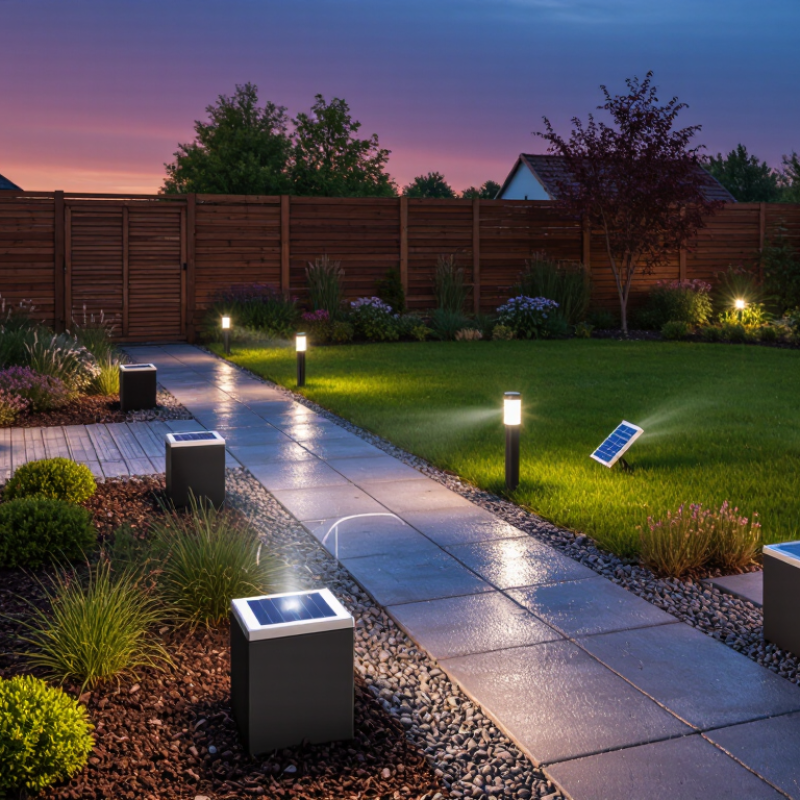
Choosing the right solar pathway lights starts with the path itself. A narrow garden walk needs compact fixtures that provide gentle guidance without blocking movement. Wider paths can handle taller lights with broader lenses. Choose a design that matches the landscape, but do not let appearance reduce safety. A decorative cap may cast attractive shadows, yet it can produce uneven lighting. I once selected lights that looked elegant in daylight but left dark patches at night.

Size affects both brightness and balance. Measure the path width, spacing, and nearby plants before buying. Small lights often work well when placed evenly every six to eight feet. For larger areas, choose fixtures with stronger output and wider light distribution. Warm white light usually creates a comfortable residential setting, while cooler light can make steps and edges appear sharper. Check the product’s weather-resistance rating and battery specifications. These details are more reliable than attractive packaging claims.

Installation should be simple, stable, and easy to adjust. Place each light where the solar panel receives direct sunlight for most of the day. Avoid locations beneath dense branches or beside tall walls. Push stakes into softened soil, not hard ground, because forced installation may damage the fixture.

Tips: Test the layout before fixing every light. Observe the path after sunset. Move any fixture that creates glare, weak coverage, or awkward shadows. Seasonal sunlight changes can also affect performance, so review the placement occasionally.

Comparing Energy Efficiency, Maintenance Needs, and Overall Value

How to Choose the Best Solar Pathway Lights?

Energy efficiency begins with the lamp, not the panel. The U.S. Department of Energy reports that LED lighting uses at least 75% less energy than incandescent lighting. LEDs also last up to 25 times longer. Solar pathway lights avoid grid electricity, but their real performance depends on sunlight, battery quality, and control settings. NREL research on crystalline-silicon modules found a median degradation rate near 0.5% annually. Small outdoor panels can age differently, especially under heat, dust, or repeated moisture. Brightness claims can mislead.

Brightness claims can mislead. A light that runs six hours in summer may run only three hours during cloudy winter weeks. That difference matters more than a dramatic lumen number.

Maintenance is usually simple, but not absent. Wipe the panel after dusty weeks. Trim plants that shade it. Check for water inside the housing after heavy rain. Rechargeable batteries often become the first weak component, though replacement timing varies by chemistry, temperature, and nightly runtime. A light that runs six hours in summer may run only three hours during cloudy winter weeks. That difference matters more than a dramatic lumen number.

Tips:

Compare useful runtime, not peak brightness.
Choose replaceable batteries when possible.
Check the panel’s position at noon.
Keep lights away from sprinklers.
Compare the purchase price with battery replacements over three years.

A cheaper unit may cost more when its sealed battery fails. The honest choice is sometimes less bright, but more repairable.

Checking Safety Standards, Warranty Coverage, and User Requirements

Solar pathway lights are small, but their safety obligations are not. Look for luminaires tested to IEC 60598-1 and certified for your market. For wet gardens, check the IP rating under IEC 60529. IP65 resists water jets, but it does not permit immersion. Verify the actual certification mark. Avoid vague “weatherproof” wording. The IEA Renewables 2024 report recorded nearly 510 GW of renewable capacity additions in 2023. Solar power supplied about three-quarters of that growth, showing rapid industry expansion, not automatic product quality.

Warranty details deserve equal attention. A two-year warranty may exclude rechargeable batteries, corrosion, cracked panels, or water damage. Check whether replacement parts are available and whether return shipping is covered. Request written runtime conditions, including sunlight hours and temperature. A claimed 12-hour runtime can be optimistic. Cloud cover and dirty panels reduce performance. A simple evening test helps reveal weak brightness and uneven charging. DOE Energy Saver data states that LEDs use at least 75% less energy than incandescent lighting and can last up to 25 times longer.

Match the light to the pathway, not the advertising photo. Measure the walkway width, spacing, and nearby steps. Choose softer output near bedrooms or wildlife areas. For shaded gardens, select larger panels or lights with replaceable batteries. Cold climates need batteries rated for low temperatures. I would also question decorative units with no published lumen output. They may look attractive at noon and disappear after midnight. Safety, warranty language, and actual household needs must be checked together.