Why Choose Night Vision Goggles for Outdoor Use?
Outdoor plans rarely end when daylight fades. A trail marker disappears first; then familiar roots become hard to read. The Outdoor Industry Association’s 2024 Outdoor Participation Trends Report counted 175.8 million U.S. participants in outdoor recreation during 2023, or 57.3% of Americans aged six and older. That broad participation figure does not measure night activity, but it shows how many people spend time outside. For campers, wildlife observers, and late-returning hikers, Night Vision Goggles can help reveal nearby terrain when natural light is limited.
The advantage is practical, not magical. These devices amplify available light or use infrared illumination, depending on the design. They may help users spot branches, identify trail edges, or monitor a campsite without relying on a bright flashlight. But performance changes with darkness, weather, distance, and image quality. Fog can soften detail. A low-cost model may show a grainy image. Check field of view, battery life, comfort, and weather resistance before choosing a pair. Try the controls with gloves on, too.
Small details matter. I would not treat night vision as a substitute for a map, careful footing, or a reliable light. Some models also require ambient light to produce a usable image, so compare specifications rather than trusting dramatic product claims. A short test in a familiar, safe area can reveal more than a polished advertisement. Night vision can make outdoor evenings more manageable, though it cannot remove every risk—or every uncertainty.
What Night Vision Goggles Are and How They Work
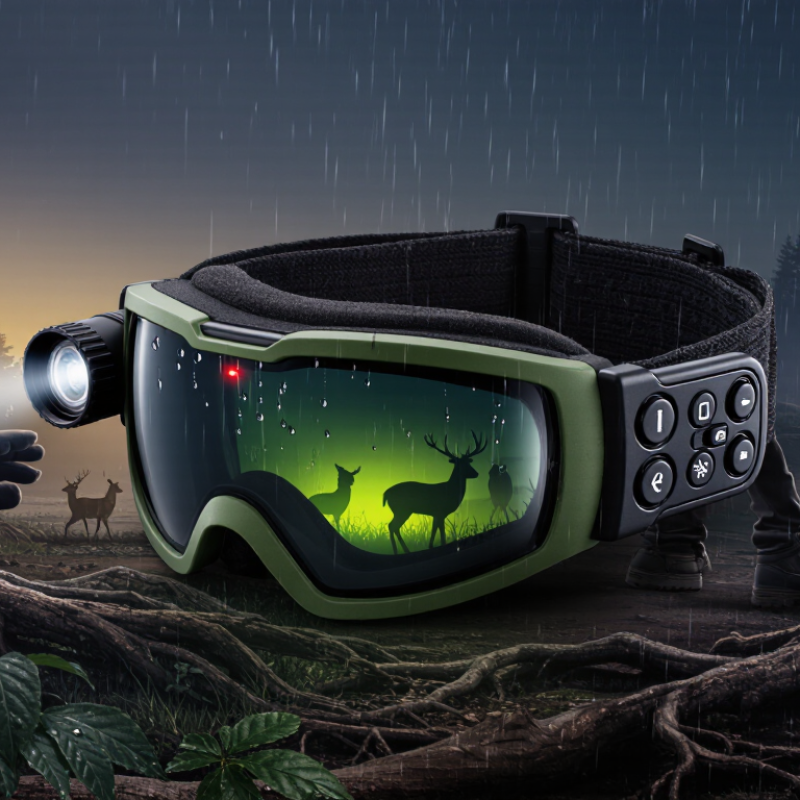
Night vision goggles are optical tools that help users see when visible light is scarce. Most image-intensifier models collect faint light from stars, the moon, or nearby lamps. A photocathode converts incoming photons into electrons. The device multiplies those electrons, then turns them into a visible image on a screen. The U.S. Army’s Night Vision and Electronic Sensors Directorate describes this process as image intensification. It is not the same as thermal imaging, which detects heat rather than reflected light. That distinction matters outdoors.
Some goggles also use infrared illumination when natural light is too weak. Their view may look grainy, narrow, or unusually green, and branches can hide details. The American Academy of Ophthalmology reports that full dark adaptation may take about 20 to 30 minutes. A bright phone screen can interrupt that adjustment. Small details matter. In practical use, fit the goggles securely, check the controls before dusk, and move carefully around roots and uneven ground. These devices improve low-light visibility, but they do not restore normal daytime vision. One limitation is easy to underestimate: a clearer image can still leave depth and distance uncertain.
Why Choose Night Vision Goggles for Outdoor Use?
What Night Vision and Thermal Imaging Detect
Image-intensifier night vision amplifies available visible light and near-infrared light, often with an infrared illuminator in low-light conditions. Thermal imagers detect emitted infrared energy instead; the 8–14 μm range shown is a commonly used long-wave infrared band. These are typical wavelength bands, not guaranteed specifications for every device.
How Outdoor Conditions Shape Night Vision Needs
Why Choose Night Vision Goggles for Outdoor Use?
How Outdoor Conditions Shape Night Vision Needs
Outdoor darkness is rarely uniform. A moonlit trail, a shaded campsite, and a tree line can demand different levels of sensitivity. Under open sky, ambient light may be enough for clear detail. Beneath dense branches, the same path can become nearly featureless. Choose equipment around the places you actually travel, not just a specification sheet.
Weather matters, too. Light rain and humid air can soften contrast, while mist may scatter infrared illumination and create glare. Night vision does not see through thick fog. A wide field of view helps when scanning uneven ground, but it may show less detail at the edges. Small trade-off. Also consider temperature and battery life; cold evenings can shorten runtime, so carry charged spares in a dry pocket. Keep lenses protected from drizzle and wipe them with a suitable cloth, not a sleeve.
Terrain shapes comfort and safety. Goggles that feel manageable in a driveway may bounce on a rocky slope or become tiring after an hour. Check how the device fits with headwear, and practice adjusting focus before darkness falls. Preserve natural vision when possible. I would not assume every outdoor outing needs maximum magnification; it can narrow awareness and make nearby obstacles easier to miss. A little caution helps. Night conditions change quickly, and no device replaces slow steps and attention to the ground.
Why Choose Night Vision Goggles for Outdoor Use? — How Outdoor Conditions Shape Night Vision Needs
| Outdoor Condition | How It Affects Visibility | What to Look for in Night Vision Goggles | Practical Outdoor Consideration |
| Moonless or heavily overcast night | Very little natural light is available for an image-intensifying device to amplify, so the scene may appear darker. | Consider a model with a built-in infrared illuminator and controls for adjusting image brightness. | Infrared illumination can help at close range, but it uses battery power and may be detectable by some night-vision equipment. |
| Bright moonlight or nearby artificial light | More available light can improve the visible image, while sudden bright sources may cause glare or temporary image washout. | Look for automatic brightness protection or manual gain control, where available. | Avoid pointing the device directly at the moon, vehicle headlights, or other intense light sources. |
| Fog, mist, or heavy rain | Water droplets and suspended moisture scatter light, reducing contrast and making distant objects harder to distinguish. | Prioritize weather-resistant construction and lens surfaces that are easy to keep clean. | Night vision does not see through dense fog or heavy rain; shorter viewing distances may still be necessary. |
| Dense woodland or brush | Leaves, branches, and uneven shadows can obscure objects and make depth and obstacles difficult to judge. | A comfortable field of view and secure, hands-free mounting can help when moving slowly through vegetation. | Use a light source when needed to inspect hazards safely; amplified images do not eliminate collision risks. |
| Open terrain and long viewing distances | Small objects become harder to identify as distance increases, even when they can be detected in the image. | Choose suitable magnification and focus controls for the intended viewing distance. | Higher magnification can narrow the field of view and make it harder to track nearby movement. |
| Cold weather | Low temperatures can reduce battery performance, and condensation may form when equipment moves between cold and warm environments. | Check the operating-temperature range and use batteries suited to the expected conditions. | Keep spare batteries protected and allow equipment to adjust gradually when changing environments. |
| Long periods outdoors | Extended use makes weight, fit, eye comfort, and power consumption increasingly important. | Compare device weight, mounting options, battery life, and the availability of comfortable adjustments. | Carry spare power and take regular breaks to reduce fatigue during prolonged use. |
Note: Image-intensifying night vision relies on available light and can be affected by weather, obstacles, and bright light. It is different from thermal imaging, which detects differences in infrared radiation emitted by objects.
Key Benefits of Using Night Vision Goggles Outdoors
Night vision goggles can make outdoor movement safer when daylight has faded. They gather available light and present a brighter view of nearby ground, branches, and trail markers. On a moonlit path, that may help you spot a low root before your boot catches it. Hands-free viewing also leaves your hands available for a walking pole or map. Small details matter.
They can support wildlife observation without relying on a bright flashlight that changes the scene. You may notice an animal’s outline, movement, or position while keeping a more natural view of the surroundings. Results depend on conditions: dense clouds, heavy foliage, and very dark areas can reduce visibility. Some models use infrared illumination, but that does not make distant objects clear or remove every blind spot.
There are limits. The view may feel narrow, and judging distance can be harder than it is with unaided vision. Pause before stepping over rocks or crossing uneven ground; take the goggles off if you need a clearer sense of depth. They help, but they do not replace a headlamp, careful route planning, or attention to weather. A little awkward at first, perhaps—but useful once you learn their view.
Common Outdoor Activities That Use Night Vision Goggles
Night vision goggles can make familiar outdoor activities easier after sunset. Wildlife watchers may use them to observe animals from a respectful distance without switching on a bright white light. On a quiet campsite, they can help locate a tent line, water bottle, or nearby trail marker. The view is not daylight-clear. Branches, shadows, and moving leaves can be hard to judge.
Hikers and campers may find them useful for checking a route or scanning the area around camp. They should not replace a map, compass, or dependable light source. Fog, rain, and thick vegetation can reduce visibility, while uneven ground may still cause trips. Keep expectations modest. A device helps you see some details, not every hazard. Wildlife observation also takes patience; sudden movement or noise can disturb animals, even when you can see them clearly.
Tips: Practice in a familiar, open area before relying on goggles outdoors. Keep a regular flashlight accessible, and pause to let your eyes adjust when moving between bright and dark settings. Check the weather and battery level before leaving. Conditions matter. I would not use night vision as a reason to walk faster or approach wildlife; distance and careful footing still count.
Factors to Consider When Choosing Night Vision Goggles
Choosing night-vision goggles for outdoor use starts with the conditions you expect, not the largest advertised range. On wooded trails, a wide field of view helps reveal branches and nearby movement without constant head turns. Open terrain may call for greater detection distance, while camp tasks need comfortable focus at short range. Check resolution, eye relief, and controls while wearing gloves. Weight matters. A unit that feels light indoors may tire your neck after an hour on uneven ground.
Compare power options, battery life, and performance in low light. Fog, rain, and nearby lights can reduce visibility, so published range figures rarely tell the whole story. A specification can still disappoint in real weather. The IEC 60529 standard defines IP67 as dust-tight protection and temporary immersion under specified test conditions, including up to 1 meter of water for 30 minutes. Look for clear testing details rather than relying on an IP label alone. Grand View Research estimated the global night-vision-device market at USD 7.2 billion in 2023 and forecast 8.2% annual growth through 2030. That market estimate signals broad demand, not superior field performance; compare tested specifications and consider trying the viewing angle before buying.