2025 Top Solar Street Lamp Innovations for Sustainable Urban Lighting Solutions
As urban areas continue to expand, the demand for sustainable and efficient lighting solutions becomes increasingly crucial. According to a recent report by the International Renewable Energy Agency (IRENA), the global market for Solar Street Lamps is expected to grow by over 20% annually, reflecting the urgent need for eco-friendly urban infrastructure. With innovations emerging rapidly, municipal planners and city officials are incorporating these advanced lighting systems to reduce energy costs and lower carbon footprints.

Dr. Emily Carter, a leading expert in renewable energy technologies, emphasizes the significance of solar integration: "Solar Street Lamps not only enhance public safety but also represent a key step towards achieving sustainable cityscapes." In 2025, the spotlight will be on the top five innovations in Solar Street Lamp technology, showcasing designs that harness solar energy more efficiently, incorporate smart technology for better control, and utilize sustainable materials that align with green building standards. Embracing these innovations will not only illuminate our streets but also pave the way for a greener and more sustainable urban future.
Innovative Solar Technologies Transforming Urban Street Lighting in 2025
The landscape of urban street lighting is undergoing a significant transformation in 2025, driven by innovative solar technologies that promote sustainability. According to a report by the International Energy Agency (IEA), cities that implement solar-powered street lighting systems can reduce their energy consumption by over 50%, translating to substantial cost savings and a decrease in carbon emissions. These smart solar lamps come equipped with features such as motion sensors and adaptive brightness control, allowing for efficient energy use while enhancing public safety during nighttime hours.
One key innovation is the integration of IoT (Internet of Things) technology within solar streetlights. This advancement allows for real-time monitoring and maintenance alerts, ensuring that municipalities can respond quickly to issues, thus maximizing uptime. A recent survey conducted by the Solar Energy Industries Association (SEIA) indicated a growing trend, with 40% of urban planners prioritizing solar options for new street lighting projects due to their low environmental impact and reduced operational costs.
Tips: When considering solar street lighting solutions, municipalities should evaluate local sunlight availability and energy requirements to ensure optimal performance. Incorporating community input can further enhance acceptance and effectiveness, tailoring designs to meet the unique needs of each urban area.
Smart Integration of IoT and AI in Solar Street Lamp Systems
The integration of the Internet of Things (IoT) and artificial intelligence (AI) into solar street lamp systems is revolutionizing urban lighting solutions. These smart solar street lamps not only harness renewable energy but also feature advanced technology that enhances efficiency and functionality. By utilizing IoT sensors, these systems can monitor environmental conditions, adjust brightness based on pedestrian movement, and even communicate with other smart infrastructure, creating a harmonious urban ecosystem.
**Tips:** When considering solar street lamp systems for your community, prioritize models equipped with smart technology that allows for real-time data collection and energy management. This will not only promote energy efficiency but also increase the safety and accessibility of public spaces.
Moreover, AI algorithms can predict energy consumption patterns and optimize performance, ensuring that lighting needs are met without unnecessary waste. This intelligent approach not only reduces costs but also aligns with sustainability goals, making cities greener and smarter.
**Tips:** Engage with local authorities and tech developers to explore collaborative opportunities in deploying AI-driven solar lighting solutions. Such partnerships can lead to innovative designs and improved community infrastructure, benefiting all residents.
Sustainable Materials: The Future of Eco-Friendly Solar Street Lamps
The future of urban lighting is brightly illuminated by cutting-edge solar street lamp innovations that prioritize sustainability through eco-friendly materials. As cities expand and the demand for efficient lighting solutions grows, the integration of sustainable materials into solar street lamps not only reduces the carbon footprint but also enhances the longevity and reliability of these systems. Manufacturers are increasingly opting for recycled plastics, biodegradable components, and sustainable metals in their designs, ensuring that these lamps contribute positively to the environment from production to disposal.
Tips: When considering solar street lamps for installation, look for products made from recycled or sustainably sourced materials. This not only contributes to environmental conservation but also supports manufacturers who prioritize eco-friendly practices. Additionally, evaluate the energy efficiency of the solar panels used; higher efficiency rates mean better performance and longevity.
The adoption of sustainable materials in solar street lamps is paving the way for smarter, greener cities. Advanced designs that incorporate features such as energy storage solutions and intelligent light sensors further enhance their effectiveness. By prioritizing these innovative products, urban planners can create not only safer environments but also promote a culture of sustainability that will be essential for future generations.
2025 Innovations in Eco-Friendly Solar Street Lamps
Enhanced Energy Efficiency and Storage Solutions for Urban Lighting
The 2025 Top Solar Street Lamp Innovations promise to significantly enhance urban lighting solutions by focusing on improved energy efficiency and storage capabilities. Key players in the solar street lamp sector are investing in advanced battery technologies, specifically lithium-ion and lead-acid batteries, which offer better energy storage and management. As urban areas evolve towards sustainability, these innovations are essential to not only reduce carbon footprints but also ensure that the generated solar energy is effectively harnessed for continuous lighting, improving safety and accessibility throughout the city.
The global smart city market is projected to see substantial growth, with an expected compound annual growth rate (CAGR) of 25.2% from 2024 to 2032. This expansion is driven by the increasing demand for efficient urban infrastructure and energy solutions, including solar-powered street lamps. Enhanced energy efficiency not only lowers costs but can also transform how municipalities manage resources. Moreover, with rising energy demands in sectors like hospitality, innovations in energy management systems and microgrid technology are becoming crucial in optimizing both resource utilization and guest experiences. The integration of renewable energy solutions into urban planning highlights a shift towards more sustainable and resilient urban environments.
Design Trends and Aesthetics in Solar Street Lamp Innovations for Cities
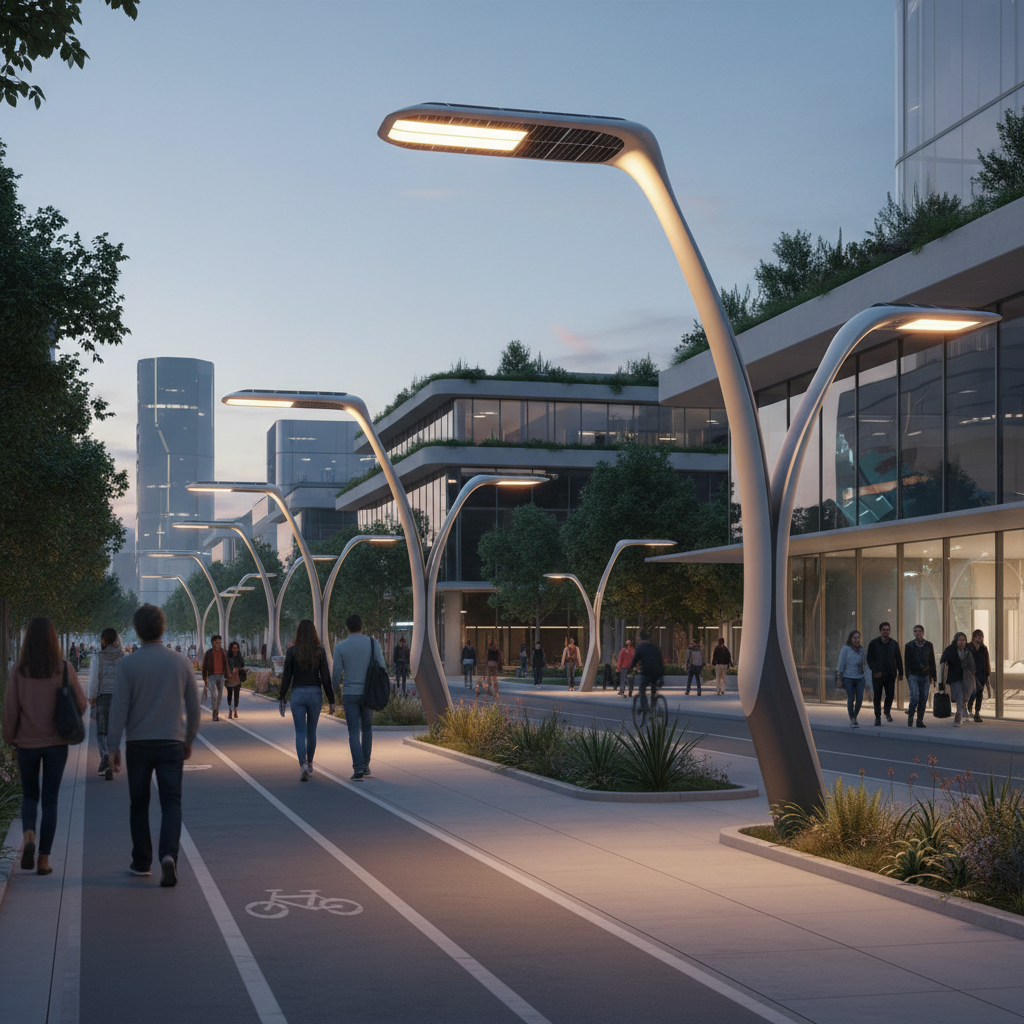
The design trends in solar street lamps are evolving to reflect a harmonious blend of functionality and aesthetics that cater to the needs of modern cities. As urban areas continue to expand, there is a pressing need for sustainable lighting solutions that also enhance the visual appeal of public spaces. In 2025, new designs will likely feature streamlined shapes and eco-friendly materials, allowing these lamps to integrate seamlessly into diverse urban landscapes.
Innovative color palettes and customizable options will also emerge, giving municipalities the flexibility to choose fixtures that complement their city’s identity and architectural style.
Moreover, the aesthetics of solar street lamps are increasingly influenced by smart technology and user-centric design. Features such as integrated LED screens for displaying real-time information, adaptive lighting that adjusts based on pedestrian activity, and artistic elements like decorative solar panel patterns will redefine street lighting. These enhancements aim not only to illuminate streets more effectively but also to create engaging environments that foster community interaction.
The future of solar street lamp design is thus positioned at the intersection of sustainability, artistic expression, and technological advancement, paving the way for vibrant urban atmospheres.