Chat with us, powered by LiveChat

Top LED Strip Lighting Suppliers for Global Buyers

Choosing a reliable LED strip lighting supplier is not just a price comparison. It is a decision about consistency, documentation, and how well a product performs after installation. A bright sample on a showroom table can look convincing. The real test comes along a long run, inside a warm cabinet, or under a dimmer after months of use.

Lighting researcher Dr. Nadarajah Narendran’s work supports this practical takeaway, stated here as a paraphrase rather than a direct quotation: “Assess the whole lighting system, not only the LED source.” For buyers, that means checking more than advertised brightness. Ask about color consistency, CRI, voltage drop, thermal management, adhesive backing, and available test reports. Confirm whether specifications apply to the exact model being quoted. Small differences matter. A strip that shifts from warm white to pink across a kitchen counter is not a minor detail.

This guide introduces suppliers serving global buyers and the questions worth asking before requesting samples or placing an order. Compare product range, customization, minimum order quantities, lead times, communication, and after-sales support. Request a sample reel, then inspect it under the conditions where it will actually be used. Real sourcing is rarely tidy. Catalogs can omit useful details, and a promising first conversation does not guarantee steady production. Keep written records, verify claims, and leave room for a second opinion. The strongest supplier is not always the cheapest—or the most polished online.
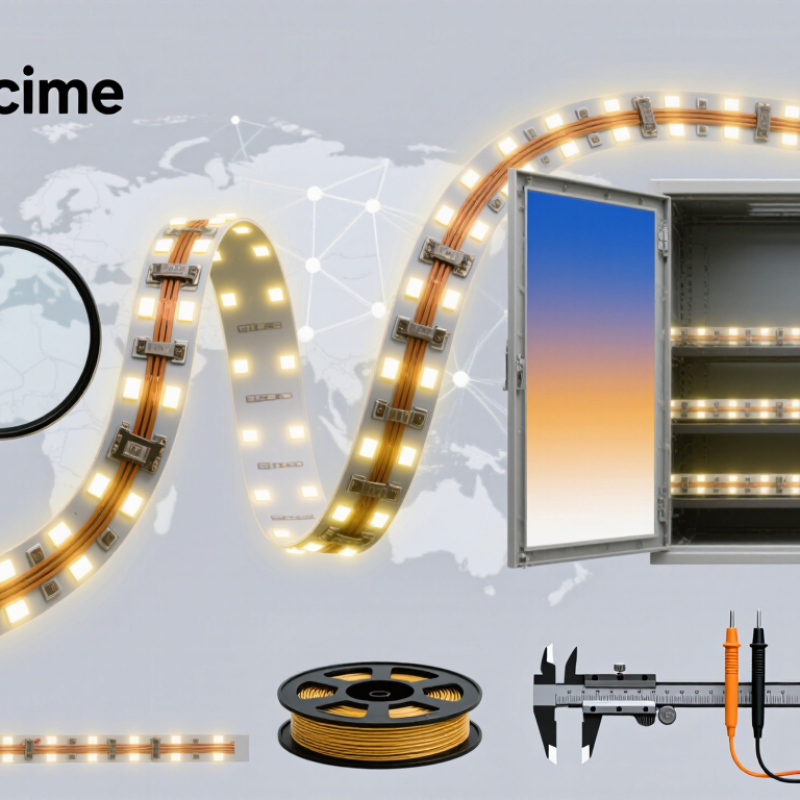
Top LED Strip Lighting Suppliers for Global Buyers

Understanding LED Strip Lighting and Its Global Supply Market

LED strip lighting is a flexible circuit carrying closely spaced light-emitting diodes, usually supplied on reels. Buyers compare voltage, LED density, color temperature, color-rendering index, and dimming compatibility. A 24-volt strip may suit longer runs better than a 12-volt option, but the installation still needs correctly sized power supplies and careful voltage-drop planning. Small details matter.

The U.S. Department of Energy reports that residential LED bulbs use at least 75% less energy and last up to 25 times longer than incandescent bulbs. Those figures describe bulbs, not every strip system; drivers, heat, and installation affect real-world results. Meanwhile, Grand View Research valued the global LED lighting market at US$75.4 billion in 2023 and projected a 10.5% compound annual growth rate from 2024 to 2030. This broad market figure offers context, not a strip-lighting forecast.

Global sourcing adds practical questions. Ask for test reports covering electrical safety, photometric performance, and color consistency, then check whether samples match production specifications. Confirm cut marks, connector type, reel length, packaging, and replacement-part availability before ordering. A bright sample can look convincing. It may still reveal uneven color after several reels are installed, so inspect multiple batches where possible. Supplier documents help, but they do not replace hands-on checks.


How to Assess LED Strip Lighting Suppliers

How to Assess LED Strip Lighting Suppliers

A reliable supplier should explain more than wattage and lumen output. Ask for the strip’s voltage, power per metre, LED density, colour-rendering index, and measured output. The U.S. Department of Energy’s solid-state lighting research highlights efficacy, colour quality, and reliability as important performance considerations. Request test reports tied to the exact product, not a similar-looking sample. IEA estimates that lighting uses about 15% of global electricity, so poor efficiency can matter at scale.

Check how the supplier controls colour consistency between production batches. Ask about LED binning, adhesive performance, copper thickness, and heat management. Request LM-80 data for the LED package and a clearly explained TM-21 projection; these do not guarantee the whole strip’s service life. Review safety and ingress-protection test documentation against the installation environment. A strip for a dry cabinet needs different protection from one near moisture. Paper specifications still miss practical details, and that gap deserves attention.

Tips: Order a sample roll and inspect it at full brightness. Ask for dimming tests, cut-point spacing, warranty terms, and lead times in writing. Keep one sample from each approved batch. Small differences show up.

Major Types of LED Strip Lighting Suppliers

Major Types of LED Strip Lighting Suppliers

LED strip suppliers generally fall into manufacturers, specialist distributors, and sourcing platforms. Manufacturers produce strips directly and may offer custom lengths, color temperatures, or connector layouts. Their technical teams can explain LED density, voltage drop, and heat management. Ask for a sample reel. Compare its brightness at both ends, not only near the power feed.

Distributors stock products from several factories, making it easier to compare specifications or replace a small quantity quickly. They may also provide cut-to-length service, compatible power supplies, and installation guidance. Check whether the stated CRI, color-bin consistency, and IP rating appear on product documents. A label alone is weak evidence. Some distributors have limited influence over factory changes, so confirm the exact specification before repeat orders.

Sourcing platforms connect buyers with many suppliers, often including OEM and private-label producers. They can be useful for broad price checks, but listings may hide differences in copper thickness, adhesive, or testing methods. Request a datasheet and a sample from the production batch when possible. A low quote can still be sensible, though it deserves closer checking. Even careful comparisons cannot remove every surprise; long-run color variation may only become obvious after installation.

Top LED Strip Lighting Suppliers for Global Buyers - Major Types of LED Strip Lighting Suppliers

Supplier Type Typical Product Range Common Strengths Best Suited For Points to Check Before Ordering
LED strip manufacturers Flexible LED strips, rigid LED bars, monochrome, tunable-white, RGB, and addressable options Direct access to production specifications, product engineering, and manufacturing quality controls Importers, lighting brands, and project buyers seeking repeat orders or product customization Confirm LED binning, color consistency, operating temperature, warranty terms, and applicable test reports
OEM and private-label suppliers Customer-specified strip assemblies, packaging, labels, connectors, and accessories Can adapt products and packaging to a buyer’s requirements; production capability varies by supplier Distributors and brands developing their own product lines Clarify tooling or setup charges, minimum order quantities, intellectual-property terms, and sample approval procedures
Lighting distributors and wholesalers Ready-to-ship LED strips, compatible power supplies, controllers, profiles, and installation accessories May offer mixed product ranges, local stock, and consolidated purchasing Electrical contractors, resellers, and buyers needing smaller or more frequent orders Check stock availability, regional warranty support, product traceability, and compatibility across components
Project-focused lighting suppliers LED strips and system components selected for commercial, hospitality, architectural, or residential installations Often provide application guidance and assistance with specifications or system selection Contractors, designers, and developers working to defined lighting requirements Verify photometric data, dimming compatibility, installation details, and required ingress-protection ratings
Online sourcing platforms and trading suppliers A broad range of standard and customizable LED strip products from multiple production sources Convenient product comparison and access to a wide supplier pool Buyers researching options or comparing quotations across markets Independently verify the actual manufacturer, certifications, sample quality, transaction terms, and shipping responsibilities

Supplier capabilities, minimum order quantities, lead times, certifications, and support vary by product and market. Request current technical documentation and evaluate samples before placing a production order.

Comparing Supplier Products, Certifications, and Capabilities

A useful supplier comparison starts with the actual installation, not a glossy product sheet. Check voltage, LED density, color temperature, color rendering, and cut intervals against your design. A strip with close-spaced LEDs may give smoother light under a shallow diffuser, while a higher-output model can need better heat management. Ask for a sample and inspect it at the intended brightness. Small differences matter.

Certifications should match the exact product and target market. Request current certificates and test reports, then confirm that model numbers and ratings match the quotation. Also compare evidence of batch checks, traceability, and production capacity. Can the supplier maintain color consistency across repeat orders? Ask how changes to chips, coatings, or controllers are documented. A polished datasheet helps, but it cannot show how clearly a supplier handles a delayed sample or a failed test. That part deserves attention too.

Tips: Send suppliers the same brief, including run length, mounting surface, dimming method, and expected order volume. Compare written answers, not promises alone. Check one sample in your real fixture before committing.

Global Sourcing, Logistics, and Quality Assurance Considerations

Global buyers should evaluate LED strip suppliers beyond unit price. Ask for batch-level test records, including input voltage, wattage per meter, color temperature, color-rendering index, and output after thermal testing. The U.S. Department of Energy reports that LED products use at least 75% less energy and can last up to 25 times longer than incandescent lighting. That comparison is useful context, but it does not guarantee a strip’s lifespan; installation temperature and power supply quality matter.

Shipping plans deserve equal scrutiny. The World Bank’s 2023 Logistics Performance Index assessed 139 economies across six areas, including customs, infrastructure, and shipment timeliness. For buyers, this reinforces the need to compare actual transit routes, not just quoted lead times. Request packaging dimensions, carton weights, and a sample shipping plan before placing a large order. A tidy datasheet can still omit connector details or adhesive performance in warm climates. Check those points in a real installation.

Tips: Approve a production sample, then record its color and brightness for comparison. Confirm the supplier’s inspection criteria and what happens when a batch fails. Leave buffer time for seasonal port delays. It sounds cautious, perhaps overly so, but a delayed shipment can cost more than a slightly higher unit price.