Top 10 Electric Quadricycles for Global Buyers
Choosing the right Electric Quadricycle requires more than comparing speed, price, and glossy photographs. Global buyers face different roads, weather conditions, charging networks, and registration requirements. A compact vehicle that feels ideal in a European city may struggle on rough suburban streets or steep rural roads.
This guide introduces ten notable electric quadricycles for practical comparison. Each selection should be assessed through measurable details, including battery capacity, real-world range, charging time, passenger space, storage, safety equipment, and after-sales support. A narrow body may fit easily into crowded parking areas. However, limited cabin width can become uncomfortable during longer journeys. A small turning circle matters in tight streets. So does reliable heating during winter commutes.
Published range figures are useful, but they rarely tell the entire story. Cold temperatures, hills, passenger weight, and frequent stops can reduce daily performance. Real life is messier. Buyers should request technical documents, warranty terms, battery information, and service availability before placing an order. Local authorities may classify these vehicles differently, so road access, licensing, insurance, and charging rules must be verified independently.
The models covered here represent different priorities. Some focus on affordable urban travel. Others offer stronger weather protection, improved comfort, or greater cargo flexibility. None is perfect. That is worth remembering. A careful purchase decision depends on matching the vehicle with a specific route, climate, budget, and ownership plan. This comparison aims to provide a practical starting point, not a universal verdict.
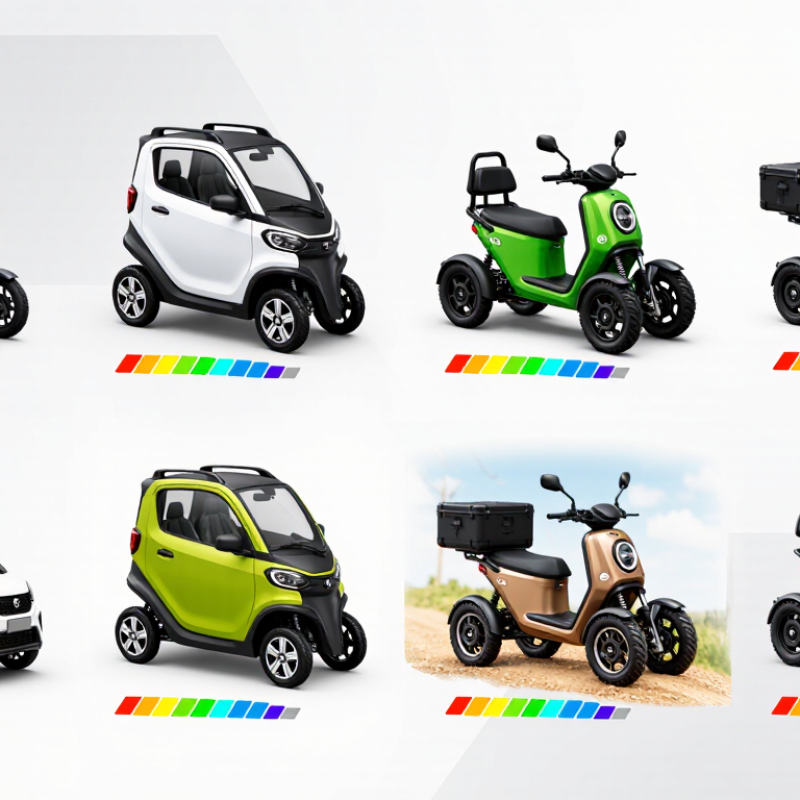
What Defines an Electric Quadricycle for Global Buyers
An electric quadricycle is more than a small battery vehicle with four wheels. For global buyers, it is a compact transport category shaped by local rules, road conditions, and daily habits. Its defining features usually include four wheels, electric propulsion, limited speed, modest weight, and a cabin designed for short urban trips.
In practical evaluations, I check the battery range against real conditions. Cold weather, hills, passengers, and frequent stops can reduce advertised distance. A useful model should offer predictable charging, clear battery information, and simple access to service parts. Charging from a household outlet may suit some users, while others need faster public charging. That difference matters.
Safety also deserves close attention. Buyers should examine braking performance, lighting, visibility, seat belts, door strength, and stability during sharp turns. A small vehicle can feel confident on narrow streets, yet vulnerable beside larger traffic. Local approval rules may define speed limits, driving requirements, parking access, and permitted roads. These rules differ widely between regions.
Payload is another overlooked detail. Two adults, shopping bags, and a small slope can quickly test a lightweight design. Weather protection, window ventilation, ground clearance, and corrosion resistance also influence ownership. Some specifications look impressive on paper but feel less useful after months of everyday use. A careful buyer should request independent test data, warranty terms, repair access, and realistic range figures before choosing an electric quadricycle.

Key Vehicle Classes, Specifications, and Performance Differences
Top 10 Electric Quadricycles for Global Buyers
Electric quadricycles vary more than their compact shapes suggest. The light class suits short urban trips, modest speeds, and limited passenger loads. Heavy quadricycles usually offer stronger motors, better climbing ability, and improved cabin protection. However, classification rules differ by country, so buyers should verify local registration and driving requirements.
The top ten choices should be compared by vehicle class, battery capacity, real-world range, charging time, payload, and turning radius. A 5–10 kWh battery may cover daily commuting, while larger packs support longer routes but add weight. Some models reach about 45 km/h; faster versions may approach 80–90 km/h. Performance depends on temperature, hills, tire pressure, and passenger weight. A neat specification sheet can still mislead. I would test the vehicle on a real route before making a decision.
Tips: Measure your parking space and charging access first. Check whether the cable fits your outlet safely. Ask for verified range testing, not only laboratory figures. Inspect braking feel, suspension movement, visibility, and door sealing. Rear seating can appear practical, yet legroom may be uncomfortable for adults. Also compare warranty coverage, battery replacement terms, and service availability. These details often matter more than a slightly higher top speed.
Top 10 Electric Quadricycles for Global Buyers - Key Vehicle Classes, Specifications, and Performance Differences
| Rank | Representative Vehicle Type | EU Vehicle Class | Seats | Motor Output | Battery Capacity | Published Range | Top Speed | Approx. Dimensions (L × W × H) | Charging Method | Best-Suited Use | Key Performance Difference |
|---|---|---|---|---|---|---|---|---|---|---|---|
| 1 | Compact Urban Electric Quadricycle | L6e Light quadricycle | 2 | 6 kW | 5.5 kWh | Up to 75 km | 45 km/h | 2.41 × 1.39 × 1.52 m | 230 V household outlet Approximately 3 hours | Dense-city commuting, short trips, car-free urban zones | Small footprint and low operating demand; limited to urban-speed roads in many markets. |
| 2 | Extended-Body City Quadricycle | L6e Light quadricycle | 2 | 6 kW | 5.5 kWh | Up to 75 km | 45 km/h | 2.54 × 1.40 × 1.53 m | 230 V household outlet Approximately 4 hours | Urban errands, shopping, compact commercial fleets | Offers a slightly longer body and improved cargo flexibility while retaining the L6e speed limit. |
| 3 | Dual-Battery Microcar | L6e / L7e Market-dependent | 2 | 6–14 kW | 5.6–11.2 kWh | Up to 175 km | 45–85 km/h | 2.28 × 1.27 × 1.57 m | Removable battery charging Approximately 6–9 hours | Apartment living, delivery work, urban mobility services | Removable batteries can simplify charging where dedicated parking or a wall charger is unavailable. |
| 4 | Streamlined Two-Seat L7e Microcar | L7e Heavy quadricycle | 2 | 12.5 kW | 6–14 kWh | Up to 177 km | 90 km/h | 2.52 × 1.47 × 1.50 m | AC charging Approximately 3–4 hours | Suburban commuting and mixed urban-road travel | Higher speed and stronger acceleration than L6e vehicles, with better suitability for faster connecting roads. |
| 5 | Modular L7e City Microcar | L7e Heavy quadricycle | 2 | 15 kW | 10.3 kWh | Up to 150 km | 80 km/h | 2.53 × 1.50 × 1.56 m | AC charging Approximately 4 hours | City-to-suburb travel, fleet and car-sharing applications | Prioritizes usable road speed and compact parking dimensions over full-size passenger-car performance. |
| 6 | Open-Side Electric Quadricycle | L6e / L7e Version-dependent | 2 | 4–13 kW | 6.1 kWh | Up to 100 km | 45–80 km/h | 2.34 × 1.24 × 1.45 m | AC charging Approximately 3.5 hours | Short urban commutes and low-speed neighborhood travel | Very narrow body improves maneuverability, but weather protection and luggage capacity can be limited. |
| 7 | Long-Range L6e Hatchback Quadricycle | L6e Light quadricycle | 2 | 6 kW | 5.5 kWh | Up to 113 km | 45 km/h | 2.76 × 1.50 × 1.46 m | 230 V household outlet Approximately 3.5 hours | Daily commuting where licensing rules favor light quadricycles | Longer claimed range and a more conventional cabin than the smallest urban models, but no increase in top speed. |
| 8 | Utility-Focused L6e Microcar | L6e Light quadricycle | 2 | 4 kW | 3.3–5.3 kWh | Up to 100 km | 45 km/h | 2.11 × 1.09 × 1.57 m | AC charging or removable battery Approximately 3–6 hours | Restricted city centers, campuses, hospitality and local delivery | One of the narrowest formats; excellent for tight streets and parking, with lower comfort and carrying capacity. |
| 9 | Comfort-Oriented L6e City Car | L6e Light quadricycle | 2 | 8.2 kW | 4.5–8.2 kWh | Up to 192 km | 45 km/h | 2.96 × 1.50 × 1.47 m | AC charging Approximately 3–5 hours | Longer daily urban use and users seeking more cabin space | Among the longest claimed ranges in the L6e category; speed remains restricted by vehicle class. |
| 10 | Compact L7e Performance Microcar | L7e Heavy quadricycle | 2 | 15 kW | 10.5 kWh | Up to 150 km | 80 km/h | 2.53 × 1.50 × 1.56 m | AC charging Approximately 4 hours | Suburban routes, urban ring roads and shared mobility fleets | More capable than L6e models on faster roads, but still lighter, smaller and less protective than a conventional passenger car. |
Figures are representative published specifications for comparable production configurations. Actual range, charging time, dimensions, licensing requirements and permitted road use may vary by battery option, equipment level, homologation market, temperature, payload and driving conditions.
Top Electric Quadricycles Compared by Range, Power, and Practicality
Top 10 Electric Quadricycles for Global Buyers
Top Electric Quadricycles Compared by Range, Power, and Practicality
The top ten electric quadricycles differ sharply in range, motor output, cabin comfort, and daily usefulness. Entry-level models often deliver 60–100 kilometres per charge, while larger versions may approach 150 kilometres under controlled conditions. Real roads differ. Cold weather, hills, passengers, and heating can reduce distance noticeably. A practical comparison should examine usable battery capacity, charging time, and warranty support, not advertised range alone.
Power also changes the driving experience. Smaller motors suit flat streets, short commutes, and low-speed urban travel. Higher-output systems climb slopes more confidently and carry heavier loads, but they may consume more energy. Check acceleration, braking feel, turning radius, and visibility during a supervised test drive.
A narrow body can simplify parking, yet limited luggage space may become frustrating after grocery trips. I would measure the storage area personally; published dimensions sometimes hide awkward wheel arches.
Tips: Compare at least three vehicles using the same route and payload. Record energy use, cabin noise, seat comfort, and charging behaviour. Ask whether the charger works with your local electrical supply. Also inspect tyre availability and service access before ordering. A low purchase price can lose its appeal when parts take weeks to arrive. Range matters. Practicality decides.
Safety, Charging, Licensing, and Regulatory Considerations Worldwide
Top 10 Electric Quadricycles for Global Buyers
Electric quadricycles offer compact mobility, but safety ratings can differ sharply from passenger cars. Their lighter frames and lower speeds reduce some crash energy, yet occupant protection remains limited. The World Health Organization reported 1.19 million annual road deaths in its Global Status Report on Road Safety 2023. Buyers should inspect structural testing, braking systems, seat-belt design, lighting, and visibility before comparing range or styling. A tidy cabin does not guarantee strong protection.
Charging access is another practical dividing line. The IEA’s Global EV Outlook 2024 recorded more than four million public charging points worldwide at the end of 2023. Still, many quadricycles support slower AC charging and may not accept every public connector. Check plug type, charging time, battery warranty, and household voltage. A ten-minute range check is useful. It is not enough.
Licensing and registration depend on national, regional, and sometimes municipal rules. In the European Union, L6e and L7e classifications generally separate lighter, slower vehicles from more powerful quadricycles under Regulation (EU) 168/2013. Age limits, driving permits, insurance, helmet rules, and road access can vary. UNECE Regulation No. 100 also sets technical requirements for electric powertrains in many type-approval systems. Buyers should verify local authority records before payment. I would not trust a seller’s verbal assurance alone. Even official-looking specifications can omit payload limits, winter range, or battery transport requirements.
How to Choose the Right Electric Quadricycle for Your Market
Top 10 Electric Quadricycles for Global Buyers
How to Choose the Right Electric Quadricycle for Your Market
Choosing an electric quadricycle starts with local use, not attractive specifications. Study daily distances, road surfaces, weather, parking space, and passenger needs. A vehicle for narrow urban streets may need a small turning radius and compact body. A rural delivery market may require stronger suspension, greater ground clearance, and practical cargo capacity. Check battery range under real conditions. Cold weather, hills, heavy loads, and frequent stops can reduce it significantly.
Market approval is equally important. Confirm local requirements for speed limits, lighting, braking, seat belts, battery safety, and charging equipment. Ask suppliers for test records, technical files, warranty terms, and spare-part support. Service access matters more than a slightly lower purchase price. A minor electrical fault can become expensive when trained technicians are unavailable. Also compare charging time, battery replacement cost, and energy consumption. Perfect specifications rarely exist.