Chat with us, powered by LiveChat

Top 10 Solar Lights Indoor for Global Buyers?

Solar Lights Indoor can make a dark hallway, bedside table, or garden-facing room more useful without adding another outlet. But indoor solar lighting is not as simple as placing a panel near a window. Glass, shade, panel size, and daily sunlight can all affect charging. Small details matter.

Energy-efficiency expert Amory Lovins is often credited with the reminder, “The cheapest energy is the energy you don’t use.” It is a useful lens for choosing solar lights: compare brightness with battery capacity, and consider whether motion sensing or a timer can reduce wasted power. A light that looks bright in a product photo may feel weak above a kitchen counter. Check the stated lumen output, panel placement, charging method, and expected runtime before buying.

This guide compares ten Solar Lights Indoor options for global buyers, focusing on practical features rather than treating one model as best for every home. Some products use a separate panel that can sit near a sunny window; others depend on integrated panels and may charge slowly indoors. Results vary by room and season. That can be frustrating. Product specifications also do not tell the whole story, and this guide cannot replace testing in your own space. Use the comparisons as a starting point, then match each light to your available daylight, intended location, and everyday needs.
Top 10 Solar Lights Indoor for Global Buyers?

What Indoor Solar Lights Are and How They Work

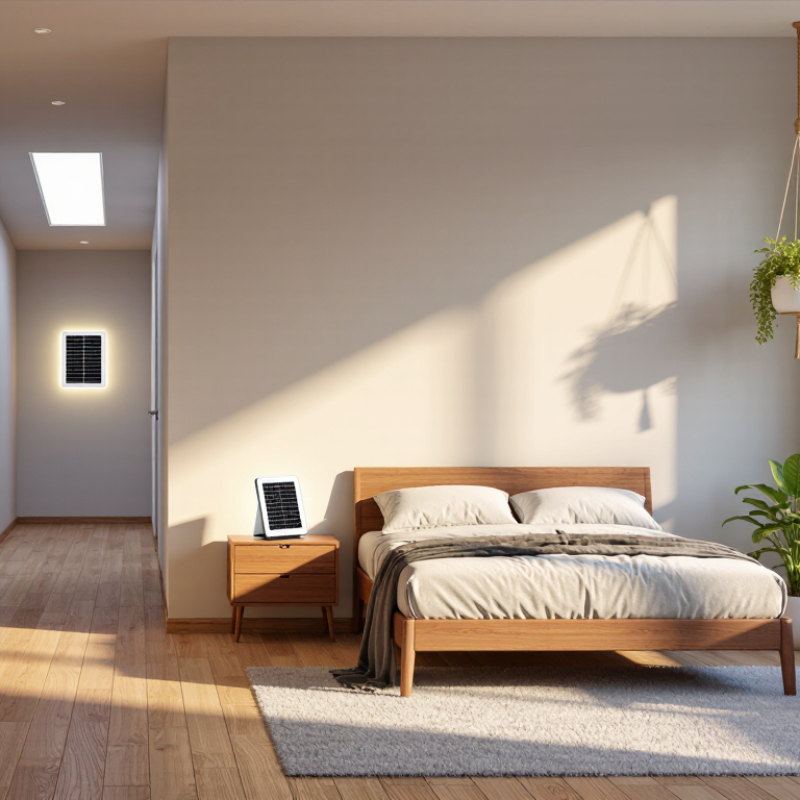
Indoor solar lights convert daylight into stored electrical energy, then use that energy to power LED lamps. A typical system includes a solar panel, a rechargeable battery, wiring, and a switch or light sensor. Some designs place the panel on the lamp, while others connect it by cable to a brighter spot. That difference matters indoors.

Photovoltaic cells in the panel generate electricity when sunlight reaches them. The battery stores part of that energy for use after dark. When the lamp turns on, the battery supplies power to its LEDs. Light fades quickly. Cloudy weather, short winter days, and shaded windows can all reduce charging. Ordinary window glass may also limit the sunlight reaching a panel, depending on the glass and its position.

For steady performance, place a separate panel where it receives strong daylight, then route its cable to the room’s lamp. Keep the panel clean; dust on its surface can reduce light exposure. A small reading lamp may need less stored energy than a brighter room light, so check its expected runtime and charging conditions. A bright room is not necessarily a good charging spot. It is easy to assume that daylight indoors is enough, but the panel’s actual exposure often tells a different story.

Key Features to Compare Before Buying

When comparing indoor solar lights, start with usable brightness, not a large number on the box. Check lumens, beam spread, and whether the light offers adjustable brightness. A reading lamp needs a focused beam; a hallway light needs wider coverage. Match battery capacity to the stated runtime, then check whether that runtime applies at full brightness. Small details matter. Look for a replaceable battery, a clear charging indicator, and a panel that can be positioned in direct sunlight. Charging through a window may be slower, especially with shaded glass.

Tips: Compare runtime at the brightness you will actually use. Check whether the panel is separate, and measure the cable before choosing a spot. A sunny windowsill can look convenient, but it may not charge well all day.

The International Energy Agency’s Renewables 2023 report says solar PV made up about three-quarters of new renewable capacity added worldwide that year. That growth signals a broadening market, not uniform product quality. For global buyers, compare charging time, battery type, light output, and operating temperature ranges in the product specifications. Also confirm what accessories and replacement parts are available locally. I would not rely on a headline runtime alone; real results vary with sunlight, placement, and daily use. My own first choice might still be wrong for a dim apartment.

Top 10 Indoor Solar Lights for Global Buyers

Indoor solar lights can reduce reliance on room wiring, but they still need sunlight somewhere. A separate panel placed outdoors often charges more reliably than one behind glass. Check cable length, battery capacity, charging time, and whether replacement parts are available locally. Small details matter.

Useful choices include a compact desk lamp, an adjustable reading lamp, a pendant fixture, a wall sconce, and a ceiling light. For focused tasks, look for steady brightness and a shade that limits glare. Cabinet strips suit pantry shelves and wardrobes. Motion-activated night lights help in hallways, while rechargeable emergency bulbs offer backup during outages. A portable solar lantern can move between rooms. A floor lamp works for broad light, though its panel and cable may need more space.

Compare all ten styles against the room, not just the product photo. A bright-looking lamp may feel weak beside a large worktable. Check whether its panel can face direct sun, and test the cable route before buying. For buyers in cloudy regions, a larger panel or extra battery may help, but neither guarantees consistent output. Window charging can disappoint. Specifications also vary, so ask for measured runtime at the intended brightness rather than relying on vague claims.

Top 10 Indoor Solar Lights for Global Buyers

Typical indoor illuminance targets can help buyers match solar lighting to a room and task.

Indicative planning values: ambient and task-lighting needs vary by activity, room layout, and local guidance. Check a light’s measured output and runtime before purchasing.

Safety, Installation, and Maintenance Considerations

For indoor solar lights, separate the lamp from its charging panel whenever the design allows. Place the panel outdoors in direct, unobstructed sunlight; glass, shade, and dusty windows can reduce charging. Route the cable through a gap without pinching it. Keep the lamp away from curtains, heaters, and damp areas, and follow the maker’s charging instructions. Keep it simple. A damaged cable or swollen battery is a reason to stop using the unit, not to improvise a repair.

For global buyers, check that the product’s safety documentation names a relevant test standard. IEC TS 62257-9-5 sets test methods for off-grid lighting products, including solar lanterns. Requirements and labeling can vary by market, so verify local guidance before installation. Never assume a low-voltage light has no risks; poor-quality wiring and overheated batteries still deserve attention.

Maintenance is modest, but easy to forget. Wipe panel dust with a soft, dry cloth and inspect cable joints for cracks or corrosion. A 2013 review by NREL researchers analyzed nearly 2,000 photovoltaic degradation rates and reported a median near 0.5% per year. This is a broad panel benchmark, not a lifespan promise for compact lights. If brightness drops, check sunlight exposure and battery condition before replacing the whole unit.

How to Choose the Right Light for Your Space and Budget

Choosing an indoor solar light starts with its job, not its style. A reading corner needs a focused beam; a hallway usually needs softer, wider coverage. Check the lumen rating and compare models at similar output. The International Energy Agency reports that lighting accounts for about 15% of global electricity consumption. That figure is broad context, not a promise that one solar lamp will meaningfully cut a household bill. Small details matter.

Next, assess where the panel can charge. A panel placed behind a shaded window may collect far less energy than one positioned outdoors in direct sun. Check the stated charging time and runtime, then consider cloudy days and your local daylight hours. Look for battery capacity, replaceability, and a low-battery indicator. Useful? Very. Claimed runtimes still need real-world testing.

For budget comparisons, include the panel, mounting hardware, and likely battery replacement—not just the purchase price. The U.S. Department of Energy says LEDs use at least 75% less energy and last up to 25 times longer than incandescent lighting. That supports choosing an efficient LED, but it does not guarantee a solar unit’s quality. I would favor clear specifications and a practical return policy over extra modes I may never use.

Top 10 Solar Lights Indoor for Global Buyers? - How to Choose the Right Light for Your Space and Budget

Rank Indoor Solar Light Type Typical Solar Panel Battery Capacity Typical Brightness Typical Runtime Recommended Indoor Space Installation Method Weather Protection Indicative Price Range (USD) Best Advantage Main Limitation
1 Solar Tube Daylight System Small rooftop or exterior-mounted collector, usually 250–400 mm diameter No battery required for daylight use Equivalent to approximately 100–300 W of daylight Daylight only Hallways, kitchens, bathrooms, living rooms Professionally installed through the roof or ceiling Exterior collector is normally weather-sealed $250–$900 Bright, natural-looking light with very low operating cost Higher installation cost and no light after sunset without an added lamp
2 Solar Pendant Ceiling Light Separate outdoor panel, commonly 3–10 W 2,000–6,000 mAh lithium battery 200–600 lumens 6–12 hours Bedrooms, dining areas, home offices, small shops Ceiling or wall mounting with a connecting cable Panel commonly rated IP65 or above $35–$120 Provides practical overhead lighting without grid wiring Requires a sunny location for the external panel
3 Solar Wall Light with Remote Panel Separate 3–8 W photovoltaic panel 2,000–5,000 mAh lithium battery 300–800 lumens 6–10 hours Entryways, staircases, corridors, utility rooms Screws, brackets, or adhesive mounting depending on surface Outdoor panel typically IP65–IP67 $25–$90 Good balance of brightness, flexibility, and affordability Usually directional rather than suitable for whole-room lighting
4 Solar Emergency Lantern Built-in compact panel, usually 0.5–2 W 1,000–4,000 mAh rechargeable battery 100–500 lumens 4–20 hours, depending on brightness Emergency kits, bedrooms, camping rooms, power-outage areas Portable; can be placed on a table or hung Many models are splash-resistant, commonly IPX4–IPX5 $15–$60 Portable backup lighting and simple charging options Small integrated panel charges slowly indoors or in cloudy weather
5 Solar Desk or Reading Lamp Separate 1–3 W panel or compact integrated panel 1,500–4,000 mAh battery 150–450 lumens 5–15 hours Desks, study corners, bedside tables, reading areas Tabletop placement with adjustable head or arm Panel protection generally IP65 or above $20–$75 Focused light for reading and task work Limited coverage for large rooms
6 Solar String or Fairy Lights Small external panel, usually 1–3 W 600–2,000 mAh battery 50–200 lumens total 6–12 hours Bedrooms, balconies, cafés, decorative indoor spaces Hooks, clips, adhesive strips, or flexible placement Outdoor panel and light cable commonly IP44–IP65 $10–$45 Low-cost decorative lighting with easy installation Not suitable as the main light source for functional tasks
7 Solar Motion-Sensor Utility Light Separate 2–6 W panel 1,500–5,000 mAh lithium battery 300–1,000 lumens Several nights in sensor mode; 2–8 hours continuously Storage rooms, garages, stairwells, entrances Wall or ceiling mounting Outdoor panel commonly IP65–IP67 $25–$100 Delivers bright light only when movement is detected Sensor range and activation reliability vary by temperature and placement
8 Solar Table Lantern Integrated 0.5–2 W panel or detachable panel 1,000–3,000 mAh battery 80–350 lumens 5–15 hours Dining tables, patios enclosed with glass, lounges, bedside areas Portable tabletop placement Commonly splash-resistant, approximately IP44–IP65 $18–$70 Portable ambient lighting with a warm and comfortable appearance Usually provides atmosphere rather than strong task lighting
9 Solar Skylight-Style Panel Light Exterior panel or remote collector, usually 5–15 W 3,000–10,000 mAh battery 500–1,500 lumens 4–10 hours after charging Interior rooms with limited windows, offices, workshops Ceiling-mounted panel with remote solar collector External collector commonly IP65 or above $80–$300 Higher brightness and wider coverage than portable lamps More complex installation and greater dependence on cable routing
10 Solar USB Rechargeable Light Built-in panel, commonly 1–3 W; may also support USB charging 2,000–8,000 mAh battery 150–800 lumens 4–20 hours, depending on output Home offices, emergency storage, travel, small indoor rooms Portable, magnetic, hook-mounted, or tabletop Varies widely; check the stated IP rating before outdoor use $20–$85 Flexible charging through solar energy or a USB power source Performance depends strongly on battery quality and charging conditions
Buying note: Brightness is measured in lumens, while runtime depends on battery capacity, brightness setting, temperature, and daily solar exposure. For indoor use, choose a model with a separate external panel when sunlight cannot reach the lamp directly. Prices are indicative global retail ranges for generic products and may vary by country, shipping cost, taxes, certifications, and installation requirements.