Chat with us, powered by LiveChat

Top Medical Wheelchair Manufacturers for Global Buyers

Selecting the right Medical Wheelchair manufacturer requires more than comparing prices, product photos, or advertised ranges.

The WHO and UNICEF Global Report on Assistive Technology estimates that more than 2.5 billion people need assistive products today. That figure may exceed 3.5 billion by 2050. Wheelchairs remain central to this growing demand, especially where rehabilitation services and local technical support are limited. WHO guidance also stresses proper assessment, fitting, training, and follow-up. A low-cost chair can fail quickly when its seat width, cushion, or wheel configuration is unsuitable.

Details matter.

Dr. Rory Cooper, founder of the Human Engineering Research Laboratories, has stated, “A wheelchair is not a piece of furniture; it is a mobility device.” His observation reflects a practical buying principle. A reliable manufacturer should demonstrate engineering knowledge, user testing, quality control, and after-sales support. Buyers should also examine ISO 7176 test evidence, battery specifications, spare-parts access, warranty terms, and regional compliance requirements. Certifications alone do not prove real-world performance.

This guide, “Top Medical Wheelchair Manufacturers for Global Buyers,” compares manufacturers through those practical lenses. It considers manual, powered, folding, bariatric, and rehabilitation-focused products. It also reviews export experience, customization, production capacity, and service responsiveness. Market reports often use different product definitions, so their revenue estimates can vary considerably. That limitation deserves attention. No ranking fits every hospital, distributor, or individual user. The best choice depends on terrain, caregiver support, transport conditions, clinical needs, and long-term maintenance. Procurement teams should verify specifications directly before signing contracts.

Top Medical Wheelchair Manufacturers for Global Buyers

Types of Medical Wheelchairs and Their Primary Uses

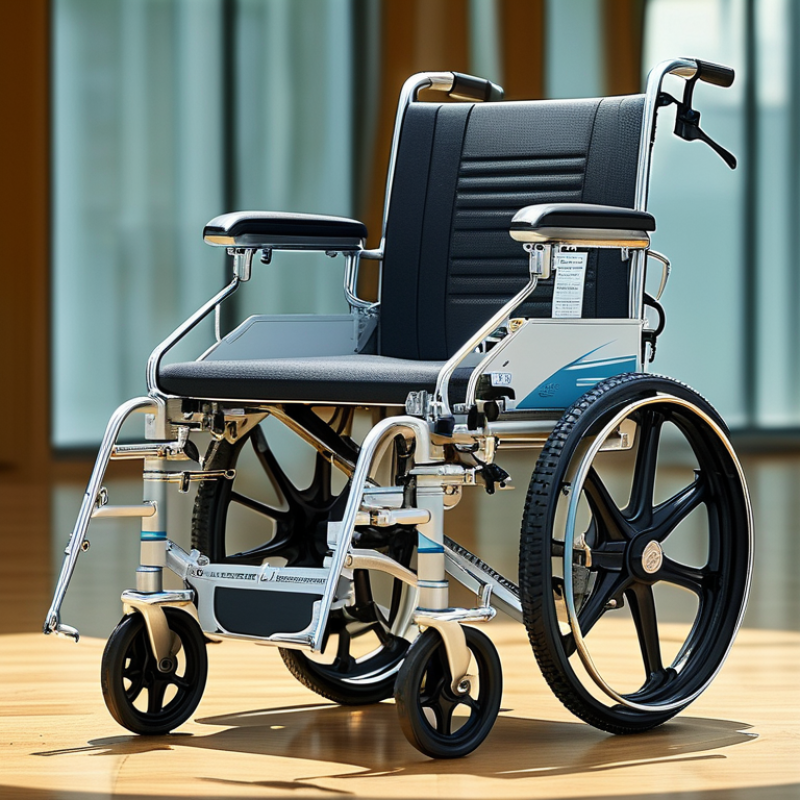
Medical wheelchairs are not one product; each design supports a different mobility need. Transport wheelchairs have light frames and smaller rear wheels. They suit short transfers, clinics, airports, and caregiver-assisted movement. Standard manual wheelchairs offer larger wheels for independent pushing on smooth, level surfaces. That distinction matters. Power wheelchairs use motors and rechargeable batteries for users with limited upper-body strength.

Reclining and tilt-in-space models help manage posture, pressure distribution, and fatigue during longer sitting periods. They require careful clinical assessment. A pediatric wheelchair must allow growth, positioning, and safe support without becoming excessively heavy.

Bariatric models need reinforced frames, wider seats, and verified weight capacities. For outdoor routes, all-terrain designs may handle uneven paths, but they can be difficult indoors.

Global buyers should ask manufacturers for sizing charts, load tests, spare-parts plans, and user manuals. Check seat width, depth, back height, footrest adjustment, turning radius, and braking performance. These details affect daily safety more than appearance. In practical purchasing reviews, a low purchase price can hide expensive maintenance and difficult repairs. That assumption deserves scrutiny. Reliable suppliers explain intended use, user training, warranty limits, and local service arrangements. Samples should be inspected with the actual user whenever possible, because a technically compliant chair may still feel uncomfortable.

Key Features That Define High-Quality Medical Wheelchair Manufacturers

High-quality medical wheelchair manufacturers build products around safety, fit, and daily clinical use. Their process should include input from therapists, caregivers, and experienced users. This practical experience can expose problems that laboratory testing may miss. Details matter. Seat width, frame balance, brake reach, and cushion pressure all affect comfort and independence.

Reliable manufacturers use controlled production systems and documented quality checks. Certifications such as ISO 13485 can indicate a structured medical-device process, but certificates alone are not enough. Buyers should review test reports, material specifications, warranty terms, and product traceability. For powered wheelchairs, battery protection, charging controls, and electromagnetic compatibility require careful verification. Small faults can become serious during hospital transport or home use.

Good suppliers also offer fitting guidance, spare parts, repair training, and clear user manuals. Support should remain available after delivery. Global buyers need documentation that matches local regulations and clinical requirements. A responsive technical team can reduce delays when parts or adjustments are needed. Still, no manufacturer fits every patient or market perfectly. Some customization may increase cost and delivery time. That tradeoff deserves honest discussion. Manufacturers that record complaints, investigate failures, and improve designs show stronger reliability than those promising perfection.

Leading Medical Wheelchair Manufacturers in Global Markets

Leading Medical Wheelchair Manufacturers in Global Markets

Global medical wheelchair buyers need more than attractive catalog images. They need evidence of safe design, stable production, and responsive service. Leading manufacturers usually provide technical files, inspection records, and clear user instructions. These documents help hospitals compare models across different markets.

Practical testing matters. A wheelchair should roll smoothly across tiled corridors, door thresholds, and outdoor ramps. Brakes must engage firmly without excessive hand strength. Footrests should fold securely, while seat dimensions must match the user’s posture and transfer needs. Experienced manufacturers test frame strength, caster movement, upholstery durability, and repeated folding cycles. They also explain weight limits honestly, rather than hiding weak points behind polished language.

Quality systems are important. Buyers can review manufacturing controls, traceability procedures, and relevant medical-device certifications, such as ISO 13485 where applicable. Local registration and import requirements still need separate verification. After-sales support should include spare wheels, brake parts, maintenance guidance, and realistic response times. A reliable supplier does not promise everything immediately. It identifies limits.

Cost can mislead. A cheaper frame may create higher repair expenses later. Hospital staff should inspect samples before placing large orders. Ask users to test turning, braking, and transfer height in real settings. No manufacturer is perfect. Even strong factories may miss a small packaging problem or delay one component. Honest corrective action often reveals more professionalism than flawless marketing claims.

Top Medical Wheelchair Manufacturers for Global Buyers - Leading Medical Wheelchair Manufacturers in Global Markets

The World Health Organization estimates that more than 75 million people worldwide need a wheelchair, while only approximately 5%–15% of those in need have access to one. The access figures shown here are calculated from the WHO estimate and represent the lower and upper ends of the reported access range. This highlights the substantial global demand for safe, appropriate, and affordable medical wheelchairs.

Source: World Health Organization, wheelchair provision and assistive technology guidance.

International Standards, Certifications, and Safety Requirements

Top Medical Wheelchair Manufacturers for Global Buyers

International Standards, Certifications, and Safety Requirements

Global buyers should treat compliance as a purchasing filter, not a decorative certificate. The WHO and UNICEF Global Report on Assistive Technology estimates that more than 2.5 billion people need assistive products today. That number may reach 3.5 billion by 2050. Demand is growing, but product quality remains uneven.

ISO 7176 provides the main testing framework for wheelchairs. Relevant tests cover braking, static stability, fatigue strength, dimensions, and energy consumption. For powered models, buyers should review battery safety, control-system performance, and electromagnetic compatibility. ISO 13485 indicates a structured medical-device quality system, while ISO 14971 supports formal risk management. These certifications help, but they do not replace model-specific test records.

Ask for current test reports, not only certificates. Check the tested configuration, load rating, battery type, and production date. Labels matter. A wheelchair passing one configuration may perform differently after a frame, seat, or controller change. EN 12183 commonly applies to manual wheelchairs, while EN 12184 covers electrically powered models in many European markets. Local registration rules still vary.

Real-world inspection is essential. Verify brake response on slopes, caster alignment, cushion attachment, and charger protection. WHO’s Guidelines on the Provision of Manual Wheelchairs emphasize assessment, fitting, training, and follow-up, not hardware alone. This point is often missed. A reliable supplier should explain servicing, spare parts, user training, and complaint handling. I would also request sample inspection records, because paperwork can look stronger than factory discipline.

Top Medical Wheelchair Manufacturers for Global Buyers - International Standards, Certifications, and Safety Requirements
Evaluation Area Applicable Standard, Regulation, or Certification Typical Product Scope Key Safety or Compliance Requirements Evidence Global Buyers Should Request Market Relevance
Quality Management System ISO 13485:2016 Medical-device design, production, inspection, servicing, and post-market processes
  • Documented quality procedures
  • Traceability and production controls
  • Corrective and preventive action processes
  • Supplier and complaint management
Valid certificate, certification scope, issuing body, certificate number, and expiry date Widely recognized for medical-device suppliers; market authorities may require additional controls
Risk Management ISO 14971:2019 Manual, powered, pediatric, bariatric, and transport wheelchairs
  • Hazard identification and risk evaluation
  • Risk controls for tipping, braking, entrapment, battery, charging, and misuse
  • Residual-risk evaluation throughout the product life cycle
Risk-management summary, hazard analysis, residual-risk information, and linkage to verification tests Important for regulatory submissions and reliable product-safety documentation
Manual Wheelchair Performance ISO 7176 Series
EN 12183
Manually propelled wheelchairs and attendant-propelled wheelchairs
  • Static and dynamic stability
  • Braking effectiveness
  • Strength, impact, and fatigue resistance
  • Dimensions, mass, turning space, and obstacle performance
Test reports identifying the exact model, configuration, maximum user mass, test method, and result Useful for comparing manual wheelchair performance across international procurement projects
Powered Wheelchair Performance ISO 7176 Series
EN 12184
Electrically powered wheelchairs and mobility scooters
  • Dynamic stability and braking
  • Maximum speed, acceleration, and deceleration
  • Obstacle-climbing capability
  • Control-system and actuator performance
Configuration-specific performance test reports, operating limits, rated load, and user manual Relevant for hospitals, rehabilitation centers, distributors, and home-care applications
Transport in Motor Vehicles ISO 7176-19 Wheelchairs intended for use as seats in motor vehicles
  • Wheelchair tie-down and occupant-restraint performance
  • Defined crash-test configuration
  • Instructions for securement and compatible restraints
Crash-test report, approved configuration, securement-point details, occupant-restraint instructions, and labeling Essential where users may remain seated in the wheelchair during vehicle transportation
Electrical and Battery Safety ISO 7176-14
IEC 60601-1, where applicable
UN 38.3 for lithium batteries
Powered wheelchairs, battery chargers, removable battery packs, and electrical accessories
  • Protection against electrical, thermal, and charging hazards
  • Battery and charger compatibility
  • Transport testing for applicable lithium batteries
  • Protection against abnormal operating conditions
Electrical safety report, charger specification, battery datasheet, UN 38.3 test summary when applicable, and transport instructions Particularly important for international shipping and air-freight planning
Electromagnetic Compatibility ISO 7176-21 Electrically powered wheelchairs and battery-operated mobility devices
  • Electromagnetic emissions control
  • Immunity to external electromagnetic interference
  • Safe operation near common electronic equipment
EMC test report showing the tested model, configuration, test laboratory, standards used, and pass results Important for hospitals and environments containing monitoring or communications equipment
Usability and User Information IEC 62366-1
ISO 7176-15
Medical wheelchairs with user controls, adjustment systems, and safety-related instructions
  • Intended-use definition and user profiles
  • Clear warnings and operating instructions
  • Information on safe adjustment, charging, maintenance, and limitations
  • Accessible labeling and technical information
Multilingual user manual, labeling samples, maintenance schedule, warnings, and training materials Reduces user error and supports safe deployment across different countries and care settings
European Union Market Access EU MDR 2017/745
CE marking
Medical wheelchairs placed on the European Union market
  • Classification and conformity assessment
  • Technical documentation and clinical evaluation
  • Post-market surveillance and vigilance
  • EU Declaration of Conformity
EU Declaration of Conformity, CE information, notified-body details where required, UDI information, and authorized representative details when applicable Required for lawful placement on the EU market; CE status should match the exact product and intended use
United States Market Access U.S. FDA requirements
21 CFR applicable provisions
Medical wheelchairs distributed in the United States
  • Applicable establishment registration and device listing
  • Quality-system and labeling obligations
  • Premarket requirements where applicable to the device and product code
  • Complaint handling and reporting obligations
FDA registration/listing information, applicable premarket documentation, labeling, U.S. importer details, and post-market contact process Requirements depend on device type, intended use, configuration, and applicable FDA classification
United Kingdom Market Access UK MDR 2002
UKCA or applicable CE arrangements
Medical wheelchairs supplied in Great Britain or Northern Ireland
  • Applicable conformity-assessment route
  • Technical documentation and labeling
  • UK responsible-person arrangements where required
  • Post-market surveillance
Declaration of conformity, market-registration information where applicable, responsible-person details, and current labeling Requirements differ by destination within the United Kingdom and should be checked before shipment
Materials and Biocompatibility ISO 10993 Series Skin-contacting cushions, covers, supports, hand grips, and other patient-contact materials
  • Biological safety evaluation based on contact type and duration
  • Assessment of irritation, sensitization, cytotoxicity, or other endpoints when applicable
  • Material and supplier consistency
Material declarations, biological-safety evaluation, test reports where required, and cleaning/disinfection compatibility data Important for long-term users, vulnerable patients, and healthcare facilities with strict infection-control procedures
Fire and Flammability Applicable regional fire-safety requirements Cushions, upholstery, covers, electrical components, and battery systems
  • Material flammability assessment
  • Battery protection and thermal-risk controls
  • Safe charging and storage instructions
Flammability test data, material specifications, battery safety documentation, and charging instructions Requirements vary by destination, healthcare setting, and product configuration
Cleaning and Infection Control Manufacturer-validated cleaning instructions Wheelchairs used in hospitals, clinics, nursing homes, and shared-care environments
  • Compatible disinfectants and concentrations
  • Cleaning frequency and method
  • Protection of upholstery, electronics, bearings, and finishes
  • Replacement guidance for damaged covers or cushions
Validated cleaning protocol, disinfectant compatibility list, material-care instructions, and service guidance Supports safe reuse and helps prevent damage caused by unsuitable chemicals or procedures
Traceability and After-Sales Support UDI and post-market systems, where applicable All regulated medical wheelchair models and accessories
  • Model and serial-number identification
  • Spare-parts availability
  • Recall and corrective-action capability
  • Service intervals and technical support
Serial-number format, warranty terms, spare-parts list, service network, complaint procedure, and recall-contact details Critical for long-term fleet ownership, institutional purchasing, and regulatory accountability

How Global Buyers Can Evaluate Suppliers and Place Orders

Top Medical Wheelchair Manufacturers for Global Buyers

Global buyers should evaluate medical wheelchair manufacturers beyond catalog photos and low prices. Check factory experience, production capacity, quality-control procedures, and relevant certifications. Request recent test reports, material specifications, and clear product drawings. A reliable supplier should explain frame strength, seat dimensions, braking performance, weight limits, and spare-parts support.

Before placing an order, ask for a sample unit. Inspect its folding action, wheel alignment, cushion comfort, and packaging protection. Confirm the agreed specifications in a written quotation, including minimum order quantity, lead time, payment terms, shipping method, and warranty coverage. Small details matter. A polished catalog is not proof of consistent production. Sometimes, buyers overlook packaging until damaged cartons arrive.

Tips: Compare at least three suppliers. Ask for factory videos or a live inspection. Verify whether the quoted model matches the tested sample. Clarify who handles customs documents and transport insurance. Use a purchase contract with measurable quality requirements. Record every change by email, even when discussions feel informal. A lower price can hide weaker brakes, thinner upholstery, or delayed replacement parts. It is also wise to plan a small trial order before scaling up, although this may increase the unit cost. That extra cost can reveal problems early.