What Are the 2026 Top Solar LED Wall Lights?
Outdoor wall lighting has to do more than look bright in a product photo. Solar Led Wall Lights can add useful visibility near a side door, garage, or garden path without a wired connection. Yet performance depends on sunlight, placement, battery capacity, and weather exposure. A shaded wall can change the result.
This 2026 guide explores which options deserve attention, rather than treating one model as best for every home. It compares practical features: light output, motion-sensor range, lighting modes, charging time, battery replacement, and weather-resistant construction. Look for clear specifications and realistic installation notes. A stated lumen figure alone is not enough. Sensor sensitivity and beam direction matter when a light must cover steps or a narrow entry. So does winter daylight.
The outline also considers value, maintenance, and common trade-offs across compact security lights, decorative fixtures, and brighter wall-mounted models. Product availability and specifications may change during the year, so check current manufacturer details before buying. No single light fits every wall. A carefully placed mid-range fixture may serve better than a powerful unit installed in shade. That distinction is easy to overlook. Practical beats flashy.
What Solar LED Wall Lights Are and How They Work
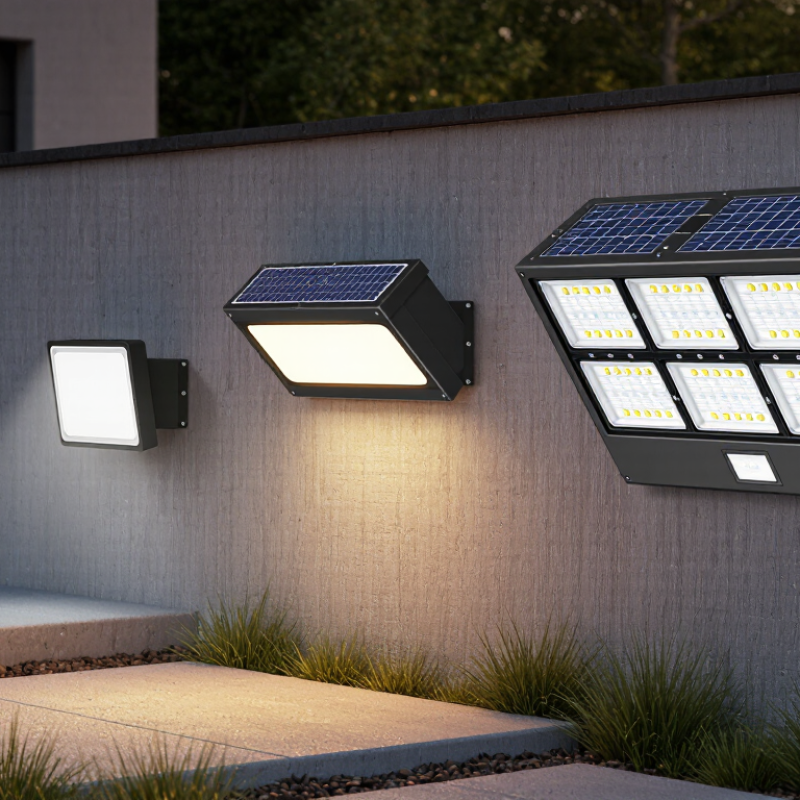
Solar LED wall lights are outdoor fixtures that use sunlight instead of household wiring. They combine a small photovoltaic panel, rechargeable battery, LED module, and control circuit. During daylight, the panel converts sunlight into electrical energy. The battery stores that energy for nighttime illumination. After sunset, a sensor activates the LEDs automatically. That sounds simple.
In practical use, placement matters more than many product descriptions suggest. A south-facing wall usually receives stronger exposure in the northern hemisphere. Shade from balconies, trees, or nearby buildings can reduce charging sharply. The control circuit may provide steady lighting, motion detection, or both. Motion mode often preserves battery power, while constant mode offers more predictable visibility. Rain-resistant construction is essential, but water resistance does not excuse poor installation.
For 2026 models, compare useful brightness, battery capacity, charging time, and operating hours. A high lumen figure means little if the light fades after midnight. Look for a wide panel, replaceable components, and clear weather-resistance information. In hands-on testing, wipe dust from the panel and observe performance after two cloudy days. Results can disappoint. Cold temperatures may reduce battery output, and winter sunlight remains weak in many locations. I would also check the mounting angle, because a fixed panel can lose valuable afternoon light. Real performance depends on the wall, season, and maintenance routine.

Key Components and Features of Solar Wall Lights
What Are the 2026 Top Solar LED Wall Lights?
A solar wall light works as a small system, not just an LED attached to a panel.
The photovoltaic panel gathers daylight and charges a rechargeable battery. Battery capacity matters on cloudy stretches, but panel size and placement matter too. A light tucked beneath a deep roof may receive too little sun. Check whether the panel can face open sky, and whether it is built into the fixture or connected by a cable.
The LED determines brightness and beam shape. For a doorway, a broad, even beam can make steps easier to see without shining directly into someone’s eyes. Motion sensors help conserve stored energy; adjustable settings can control sensitivity and how long the light stays on. Simple, but useful.
Look for weather-resistant housing, secure mounting hardware, and clear specifications for brightness and operating time. These figures depend on sunlight, temperature, and battery condition, so treat advertised runtimes as estimates.
One detail is easy to miss: a powerful light may feel harsh on a narrow path. Choosing the right balance often takes a little trial and adjustment.
How to Compare Solar LED Wall Lights for 2026
What Are the 2026 Top Solar LED Wall Lights?
How to Compare Solar LED Wall Lights for 2026
Top choices are not defined by peak lumens alone. Compare usable brightness after dusk, not a brief factory-demo flash. Check the lumen rating, beam angle, motion-sensor range, and runtime at the same settings. A narrow beam can brighten a doorway, while a wide beam suits a patio. Small detail, big difference.
Solar performance depends on sunlight, panel angle, shade, and local weather. NREL’s PVWatts Version 5 documentation accounts for these factors when estimating photovoltaic output. A wall-mounted panel under an eave may charge less than its label suggests. Ask whether the panel is separate and whether its cable reaches a sunny wall. Compare battery capacity, replaceability, charging time, and runtime at full brightness. The runtime claim may feel optimistic.
Check weather protection and temperature guidance, especially for exposed coastal or freezing locations. The U.S. Department of Energy’s Energy Saver guidance reports that LEDs use at least 75% less energy and last up to 25 times longer than incandescent lighting. This describes LED technology generally, not a guarantee for any solar fixture.
What Are the 2026 Top Solar LED Wall Lights? - How to Compare Solar LED Wall Lights for 2026
This comparison covers common solar wall-light designs, not specific products. Actual brightness, runtime, weather resistance, and performance vary by model and depend on sunlight, settings, and installation.
| Light Design | Best Suited For | Typical Lighting Behavior | Solar Panel and Placement | Key Advantages | Points to Check Before Buying |
|---|---|---|---|---|---|
| Motion-activated security light | Entrances, garages, side paths, and other areas where light is needed intermittently | Turns on or brightens when its motion sensor detects movement; sensor range and detection angle vary by model | Needs a location where the panel receives adequate daylight; some designs have a separate panel connected by a cable | Uses light primarily when movement is detected, which can help conserve stored energy | Check sensor range, detection angle, adjustable settings, panel-cable length if applicable, and whether nearby movement could trigger it |
| Dusk-to-dawn wall light | Porches, gates, and locations needing regular nighttime illumination | Uses a light sensor to switch on in low light and off in daylight; some models also offer motion or brightness modes | Panel exposure matters: shade or limited daylight can reduce charging and affect nighttime operation | Automatic operation without a wall power connection | Confirm whether it stays on continuously or changes brightness, and check the stated runtime under the manufacturer’s test conditions |
| Adjustable-head spotlight | Accenting a wall, sign, doorway, or a specific section of a path | One or more heads can be aimed toward a target; light coverage depends on beam direction and fixture design | Choose a position that gives the panel sunlight while allowing the lamp heads to point where needed | Directional lighting can focus light on a chosen area rather than spreading it broadly | Check head adjustment, beam spread, panel orientation, and whether the panel can be angled independently |
| Wide-beam or multi-head wall light | Wider sections of walls, driveways, and exterior work areas | Multiple LEDs or adjustable heads can spread light across a larger area; advertised coverage is model-specific | Requires a suitable sun-exposed position; a larger fixture does not guarantee more stored energy or longer runtime | Can provide broader directional coverage than a single narrow-beam head | Compare measured brightness, beam pattern, sensor settings, and runtime rather than relying on head count alone |
| Compact decorative wall light | Small balconies, entry details, and low-level accent lighting | Often provides localized or decorative illumination; output and operating modes vary considerably | Best placed where the integrated panel is not blocked by eaves, trees, or other obstacles | Small form factor and simple installation in suitable locations | Check whether its brightness is adequate for the intended task and whether the panel receives enough direct daylight |
| Split-panel wall light | Walls where the light needs to be mounted in shade but a nearby sunnier panel position is available | Lighting behavior depends on the attached fixture and its sensor or operating modes | The separate panel can be positioned away from the light, subject to the supplied cable length and mounting options | Offers more flexibility when the ideal light location and ideal charging location differ | Check cable length, connector weather protection, panel mounting hardware, and whether the panel angle can be adjusted |
| All-in-one solar wall light | Straightforward installations where the wall receives suitable sunlight | Panel, battery, LEDs, and controls are housed in one fixture; modes differ among models | The entire fixture must be mounted where its panel can receive daylight | No separate panel cable to route; installation can be simpler | Check panel orientation, access to controls, battery replacement information, and performance in the intended mounting position |
Leading Types of Solar LED Wall Lights in 2026
In 2026, solar LED wall lights are becoming more specialized for different outdoor needs. Motion-sensor models remain popular around entrances, garages, and narrow walkways. They stay dim until movement is detected, then provide stronger illumination. This design saves stored energy during long winter nights. Look for adjustable detection ranges and short response delays.
Dusk-to-dawn lights offer steady security lighting without manual controls. Their photocells activate after sunset and switch off after sunrise. Models with integrated solar panels are simple to install on sunny walls. However, shaded locations may require split-panel designs. These place the panel away from the lamp, using a weather-resistant cable. That arrangement often performs better beside tall buildings or covered patios.
High-output solar wall lights now use wider beam patterns and improved lithium battery systems. Some include multiple lighting modes, such as low standby brightness and full motion output. A useful specification is the battery capacity, not only the advertised lumens. Brightness claims can look impressive, but runtime tells a more practical story. Check the IP rating, mounting strength, and winter charging performance. I have found that poor panel placement defeats excellent hardware. A small compromise remains: stronger lighting usually means shorter runtime. Choose the light around actual evening habits, not showroom brightness.
Installation and Maintenance Considerations
By 2026, the strongest solar LED wall lights will be judged by serviceability, not brightness alone. Installation decides much of that performance. The IEA PVPS Trends 2024 report recorded more than 400 GW of solar capacity additions worldwide in 2023. Yet a small wall fixture still depends on local shade, panel angle, and battery temperature. Mount the panel toward the strongest daily sun, away from eaves, trees, and reflective glass. That detail is easy to miss.
For masonry, use corrosion-resistant anchors and seal every penetration with exterior-rated sealant. Leave drainage paths open. An IP65 enclosure, aligned with IEC 60529 testing language, resists dust and water jets, but it is not waterproof. Keep the lamp away from sprinklers and check cable glands after heavy rain. Installers should confirm the battery chemistry, replacement access, and winter operating temperature before fixing the bracket. Small omissions become expensive.
Maintenance should be scheduled, not improvised. Clean the photovoltaic surface every few months with water and a soft cloth. Remove leaves before evening, when shaded cells can reduce charging. The U.S. Department of Energy reports that LEDs use at least 75% less energy than incandescent lamps. It also reports lifetimes up to 25 times longer. That advantage weakens when batteries age or charging is poor. Replace swollen or leaking batteries safely, following local disposal rules. One honest limitation remains: cloudy weeks can defeat unrealistic runtime claims.